
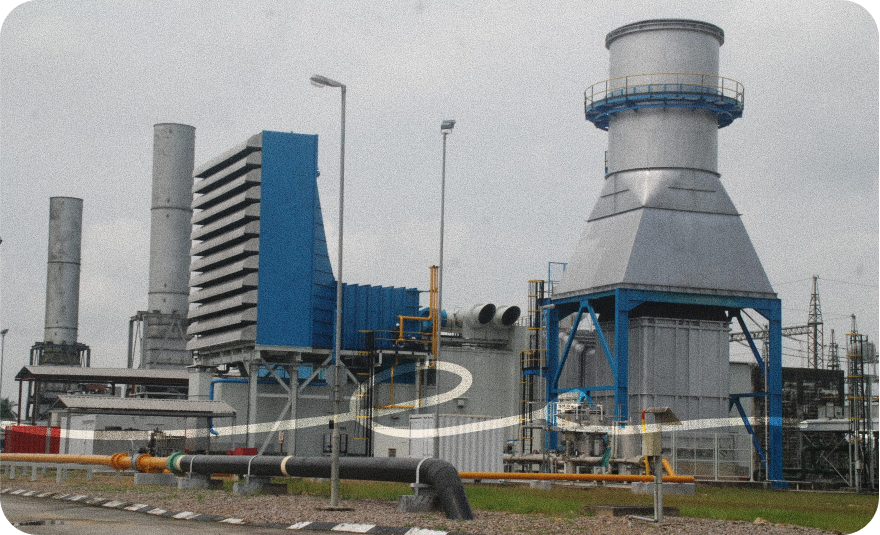
Electricity is one of those things people don’t think too much about until it’s gone. It’s often seen as a basic sign that a place is developing and that things are working the way they should. But in Akwa Ibom State, the reality feels confusing. There is a power plant in the state, one that should be enough to supply not just the state but even nearby areas. Yet, many people still live with constant outages, or no light at all.
It almost feels like having food in the kitchen but still going to bed hungry.
So the problem clearly isn’t just about generating electricity. It’s about what happens after, how it is managed, distributed, and who actually gets to benefit from it.
One issue people often talk about is how those in higher positions don’t always follow the same rules as everyone else, especially when it comes to paying electricity bills. Whether fully proven or not, this belief alone shows a lack of trust in the system. And if those at the top are not consistent, it affects everything below. Distribution companies depend on payments to run properly, fix faults, and improve supply. When that system is weak, the effects are felt most by ordinary people, who are already dealing with poor electricity.
In the end, it starts to feel like the people who get the least electricity are the ones expected to carry the system on their backs.
Another frustrating issue is the way billing works. Many households receive bills regularly, even during periods when there is little or no electricity. It creates a situation that doesn’t feel fair. People are being asked to pay for something they are barely receiving. Over time, this doesn’t just cause financial stress it builds anger and distrust.
It makes you start to wonder: what exactly are people paying for?
The recent blackout in Akwa Ibom State only makes things worse. Entire areas are left in darkness, businesses slow down, and daily life becomes harder. But somehow, the bills don’t stop coming. It creates a strange kind of frustration one where people feel stuck, with no real control over the situation.
Asides from daily memo's from the electricity company,telling us about national grid collapsing for the upteent time in a week.
At the same time, those in positions of power seem less affected. Many rely on generators or solar panels to keep their homes running. And while there’s nothing wrong with finding alternatives, it creates a clear gap. The people making decisions about electricity are not always the ones feeling the full impact of its absence.
That distance matters.
Because when you don’t experience a problem directly, it’s easier to delay fixing it.
So the big question remains: how can a state that has the capacity to generate so much power still struggle to provide light for its people?
The answer doesn’t seem to be about a lack of resources. Instead, It shows a pattern.
How we tend to adjust to situations and find alternatives just to survive.
Electricity is a basic amenity,yet we can't even get it.
This points to deeper issues how things are managed, how responsibilities are handled, and how decisions are made.
At the end of the day, the problem in Akwa Ibom State is not just about electricity. It’s about a system that isn’t working the way it should. Until that system is fixed, people will continue to live in a place that has power but still feels like it doesn’t.