
I am a questioning woman.
I have always criticised existing institutions.
I have never sat back and allowed myself to be led without a mind of my own.
I have always held different opinions in conversations, thought differently, and seen life differently from my friends and family, even though, by natural law, we are expected to think and act alike.
Sometimes I share my perspective just to be heard, sometimes so others can learn, and sometimes simply because I enjoy playing devil’s advocate.
I have always thought Nigeria gained independence too early.
I do appreciate the historical heroic patriots, but I have often wondered what we would be like if Nigerians had gained freedom much later.
None of the historical figures I was taught about shared this view, and I figured maybe they didn’t because slavery and oppression were their reality, they desperately wanted an escape. But it is also my reality now.
We just have different masters.
We were exploited by our colonial masters, stripped of both human and natural resources.
The white men took us as slaves even after the abolition of the slave trade, aided by our own brothers: the powerful, the rich.
Now, after independence, we are still oppressed: by the elite, by the government elected to lead and protect us.
Rallies are halted by violence.
Voices are threatened into silence.
I sat with this thought, why would I question something so widely celebrated?
At a point, I felt I had lost it.
Nobody seemed to agree with my arguments.
So I decided to search, to find at least one person in history who thought the same.
I knew I couldn’t be the first to think like this.
Someone must have shared this idea.
And then I found her.
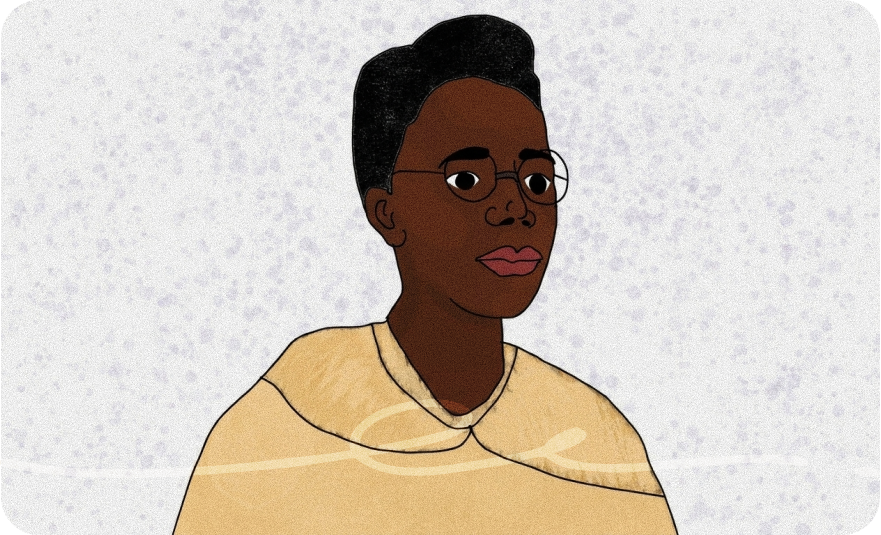
Olaniwun Adunni Oluwole
Her life spanned 1905 to 1957. Born in Ibadan and bred in Lagos, she was an educated and religious powerhouse.
Adunni did not support the fight for independence. She argued that we were not ready to wield such power. As part of the elite, she lived within the reality of the oppressors and foresaw that there would be trouble if the white men left at the time they did.
She believed in gradualism, slow-paced freedom, fearing that sudden power transfer would deepen, rather than dismantle, existing inequalities.
In a society that was deeply patriarchal, she fought to be heard and listened to. She was derided, called names, harassed - verbally and sometimes physically - but none of it deterred her.
She spoke for the poor and the oppressed - the workers.
One would think she was a colonial minion given her stance on independence, but on the contrary, she wasn’t. During the workers’ strike of 1945, she was an active participant. She donated to support the cause, marched with the workers, and demanded an increase in minimum wage from the colonial government.
Her beliefs, and rightly so, circled around the inability of the elite to treat the poor with the dignity every human deserves. She feared that power handed to us would ruin us further.
She died in 1957 in Ibadan.
Adunni’s fight has never received the applause and recognition it deserves.
She was not a coward - she was empathetic, a trait scarcely found among the elite.
In my books, she cared more for Nigeria than our highly placed “heroic” patriots.
Since colonial independence, it has been a downhill slide, confirming the very dangers Adunni warned against.
............
A woman who damned “normal” societal expectations.
A woman worth emulating.
I read her story, and I have been in awe.
She was audacious.
We share the same thought process on Nigeria, independence, and the elite but she was braver. I sometimes cower in the face of pressure over these same ideas, but she never did.
If only she was listened to.
If only her gender was not a determinant of her intellect.
If only her thoughts were not just heard, but taken into proper consideration and execution.
Maybe Nigeria would not be in such a bad place.
From independence till now, our leaders have, consciously or not, made reality the very fears Adunni warned against: power concentrated, and the poor left to bear the cost, with little voice to challenge it.
History has shown that silence has never saved us.
So what happens to the voiceless?
Well...
I remain a questioning woman
and I will continue to question, never accepting the norm blindly.