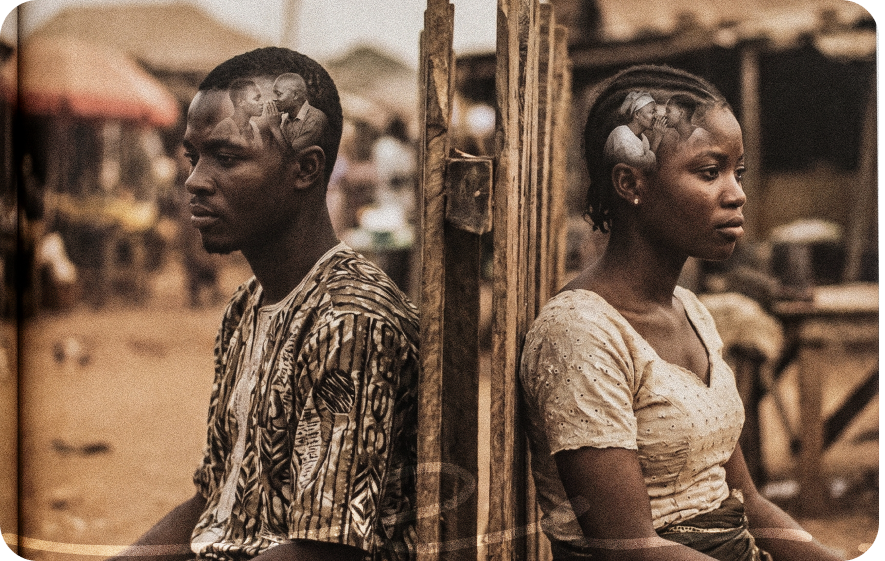
In many societies where different cultures live side by side, people grow up hearing stories about “the others.” These stories often passed off as jokes, warnings, or traditions seem harmless on the surface. But over time, they become something more dangerous. They form invisible walls that quietly dictate where we go, who we trust, and how we see those who are different from us. What we dismiss as casual talk is, in reality, a powerful force that keeps society divided and unequal.
These norms take root early in life. As children, we absorb the words of our parents and elders without question. Before we are old enough to think critically, we are already being taught who is “good” and who is not. When a child repeatedly hears that a certain tribe is dishonest, aggressive, or inferior, those ideas settle in as truth. By the time that child becomes an adult, they are no longer seeing individuals they are seeing labels. And once a person becomes a label, fairness becomes difficult, if not impossible.
This mindset creates real and lasting consequences. One of the most damaging is the trust gap. Trust is the foundation of any functioning society it fuels cooperation, business, and social stability. But when people are taught to distrust entire groups, that foundation begins to crack. A qualified job applicant may be overlooked because of their tribe. A capable entrepreneur may struggle to find partners because of their background. A family may be denied housing not because of who they are, but because of what they represent in someone else’s mind. In such a system, progress slows, not because people lack ability, but because they lack opportunity.
Tribal norms also act as silent gatekeepers, controlling access to power and success. Stereotypes about intelligence, work ethic, or behavior can influence decisions in hiring, education, and leadership. Even when individuals prove themselves capable, they often have to work twice as hard to overcome assumptions they never created. Over time, this reinforces inequality, creating a cycle where certain groups remain underrepresented not due to lack of talent, but because of deeply ingrained bias.
Perhaps the most dangerous effect of these norms is the distance they create between people. When we are taught to fear or distrust others, we avoid them. We live separately, interact less, and build fewer meaningful relationships. This separation allows stereotypes to survive unchallenged. It is easy to dislike a group you have never truly known, but much harder to hold onto prejudice when faced with real human connection. By keeping people apart, these invisible walls ensure that misunderstanding continues from one generation to the next.
But this raises an uncomfortable question: how many of the beliefs we hold are truly ours? And how many were simply inherited?
If society is to move forward, these norms must be questioned and unlearned. It is not enough to recognize their existence we must actively resist them. This means choosing to judge people based on their actions, not their origins. It means being willing to challenge what we were taught, even when it is uncomfortable.
A society built on inherited suspicion cannot thrive. As long as we continue to see one another through the lens of tribal identity, unity will remain an illusion. Breaking down these invisible walls is not just a moral choice it is a necessary step toward building a future where people are valued for who they are, not where they come from.