
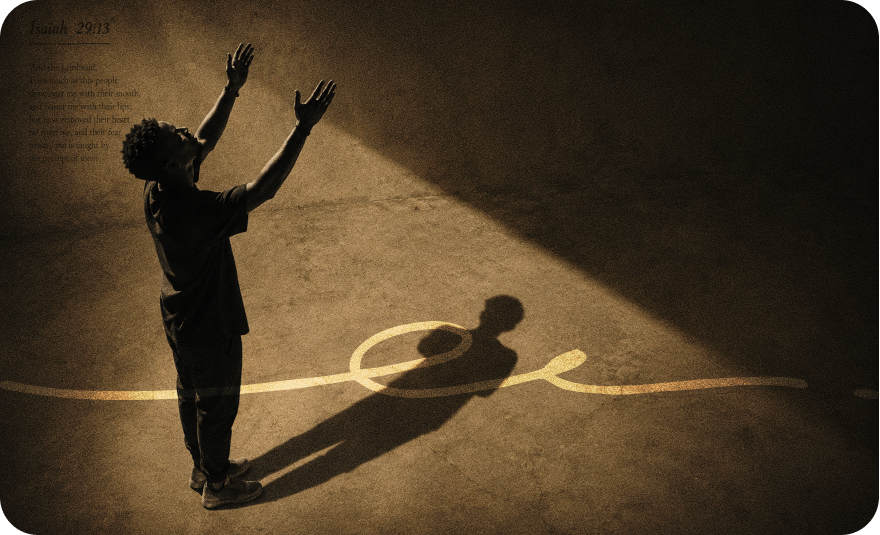
In Nigeria, Christianity is everywhere.
On buses, in markets, on social media bios, in government offices, and across entire neighborhoods built around churches. Faith is loud, visible, and socially embedded. Yet, there is a quiet contradiction many Nigerians notice but rarely articulate.
Our Christianity often thrives under pressure and fades when the pressure is removed.
This is what can be described as circumstantial or situational Christianity.
Faith That Activates in Crisis
Circumstantial Christianity is not the absence of belief; it is belief that is conditional. It intensifies in moments of uncertainty when money is scarce, when sickness strikes, when insecurity rises, when exams approach, or when visas are delayed.
In these moments, churches overflow. Prayer points multiply. Night vigils become frequent. God is approached primarily as a rescuer someone to intervene urgently and change outcomes.
There is sincerity in this faith, but it is largely reactive. God becomes most relevant when life feels most unstable.
The Diaspora Effect: Why Faith Weakens Abroad
A noticeable shift happens when many Nigerians leave the country.
Faith that was built to respond to chaos struggles to survive in order.
The Cost of Circumstantial Faith
The result is a paradox: A deeply religious society that still struggles with corruption, dishonesty, intolerance, and weak civic culture. Faith becomes compartmentalized active in prayer, inactive in daily decisions. Loud in worship, quiet in conduct.
Toward a More Rooted Christianity
A sustainable faith is not one that disappears when life improves. It is principle-based, not pressure-based. It shapes how people work, lead, treat others, and engage society whether conditions are harsh or comfortable. Such Christianity does not depend on fear or desperation. It survives both Nigeria and the diaspora. Both crisis and stability.
Circumstantial Christianity in Nigeria is not simply hypocrisy it is a mirror of national reality. But as Nigerians increasingly encounter systems that work, the future of faith will depend on one question:
Is Christianity a response to hardship, or a way of life?
Faith that only survives under pressure was never fully rooted to begin with.