
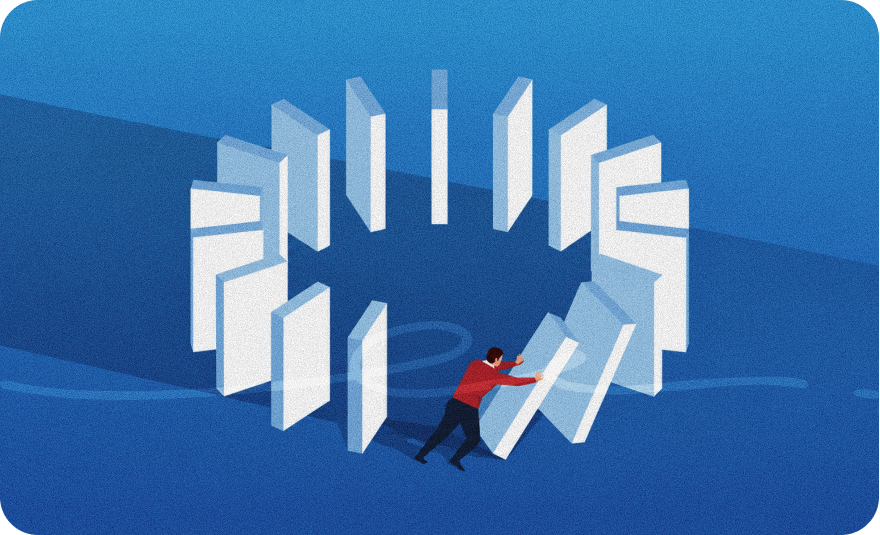
Every day of our lives, we are faced with choices. We can either choose this or that. These choices are often motivated by either present gratification or future benefits.
What many of us do not realize is that every choice we have made, are making, or will ever make has an unspoken, hidden companion that travels with it. Sometimes it shows up immediately, but most times it comes knocking years after the choice has long been forgotten. This hidden companion is consequence.
Consequence is the aftereffect of an action, decision, or event. It can be either negative or positive. It implies that our choices are not single units, but composites—packages containing many unseen elements. You cannot choose one without choosing the baggage that comes with it.
We are all, at different points, plagued by ignorance of the hidden laws of consequence. Every man out there, successful or otherwise, is a product of the accumulated consequences of his choices.
One cannot choose fire without choosing the pain of being burned; one cannot choose darkness without its attendant ignorance. We can make our choices, but we lack the ability to choose their consequences.
When we look at aspects of our lives we do not appreciate, it becomes imperative to ask: at what point did we make the decision to carry this baggage—either explicitly or implicitly?
One of the most unfortunate realities about consequence is that while we experience the results of our own decisions, actions, and inactions, we are also often subjected to the consequences of choices we had absolutely no part in.
When we choose our spouses, the consequences of that decision are far-reaching. We are not just choosing the love of our lives, but also the parents of our unborn children—their role models and the architects of the foundational paradigms that will shape their personalities.
If we kept this in mind, perhaps our choices would be influenced less by infinitesimal, inconsequential tangibles, and more by grounded, timeless qualities that transcend the visible. Unfortunately, even our perceptions have already been shaped by the consequences of our parents’ choices.
Although we make the decisions about our life partners, our children have no say in them. Yet, they will inevitably bear the consequences. These consequences will shape their understanding of home, their perception of marriage, and their priorities in life.
The law of consequence does not exempt them. It does not negotiate. It does not show empathy or consider tears. It simply delivers the full weight of what has been chosen.
This is just one example of how people can become victims of consequences they had no hand in creating.
Interestingly, some seemingly good choices carry harsh consequences, while some seemingly bad choices yield gracious outcomes. One of the greatest skills in life, therefore, is the ability to discern the hidden consequences embedded within every choice before us.
Though we may be victims of the consequences of our parents’ decisions, we can gradually mitigate their effects by making better choices ourselves. At the very least, we can ensure that our own decisions produce positive consequences for those who come after us.
So, the next time you are faced with a decision, take a moment to examine both its short-term and long-term implications. You might just choose better.
The law of consequence is not something we can avoid—but it is something we can manipulate to work in our favor.