
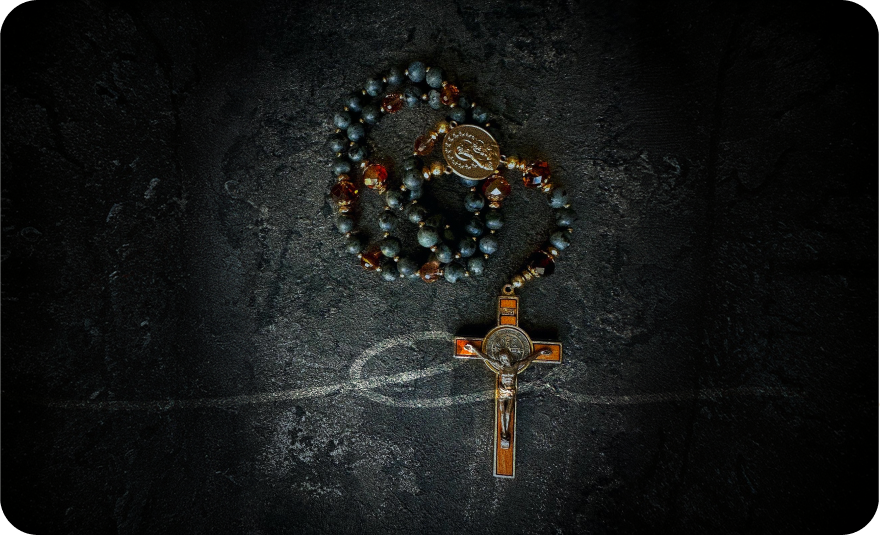
A couple of years ago, I was on my way to block rosary when a lady stopped me. She said her name was Daniella and asked where I got my rosary. She said she wanted one and asked if I could get it for her. She also asked that I prayed for her.
At the time, a rosary was 20 naira. I could easily ask my mum, but where would I see Daniella to give it to her? I was only a child and I didn’t have a phone.
I got the rosary anyway and went back to the spot I had met her, but she wasn’t there. So I went to a stall nearby and asked after her. After a series of descriptions about where she lived, the shop owner shouted and told me never to converse with “people like that.” She dismissed me immediately.
Daniella lived in a brothel and was apparently a sex worker. I knew where she lived wasn’t exactly a good place - I always saw drunks and smokers around that area - but I didn’t think that was reason enough for me to be told to avoid her, or “people like her.”
The shop owner spoke from a place of concern but also from judgment. And who would fault her? It is human instinct to want to protect children from supposed danger.
Daniella must have been through so much. Nobody thought her worthy of a second glance. She could have easily gone to the church to buy the rosary herself, yet she chose to ask someone else. Not an adult - a child.
Maybe because she believed a child would see her as human.
We have been conditioned to present caution as judgment, and to lose empathy once an individual is no longer as morally upright as society expects them to be.
Daniella’s line of work likely poses more danger to her than she does to society, yet she is the one met with distance and quiet dismissal.
She must have her reasons for doing what she does, reasons we may never fully understand. But it is not understanding that qualifies someone for dignity.
Instead of stigmatisation, instead of fear, instead of judgment, instead of subtle insults and mockery, how about we recognise that she is human first and treat her with respect? How about we bring her close, listen, and build trust - to see her beyond the label placed on her?
The “why” might not be reason enough to us as a society, but it is to her, and I think that alone deserves some level of respect.
We aren’t taught empathy enough, or rather, we aren’t taught it correctly. There is a bias. There is an unspoken standard for who deserves our respect and who doesn’t.
It has been difficult unlearning this. But I believe that if we all made a conscious effort to be different, to treat people with basic respect irrespective of what they do - as long as they do not harm others- then maybe, just maybe, the morals we hold on to so tightly in society would become more profound.