
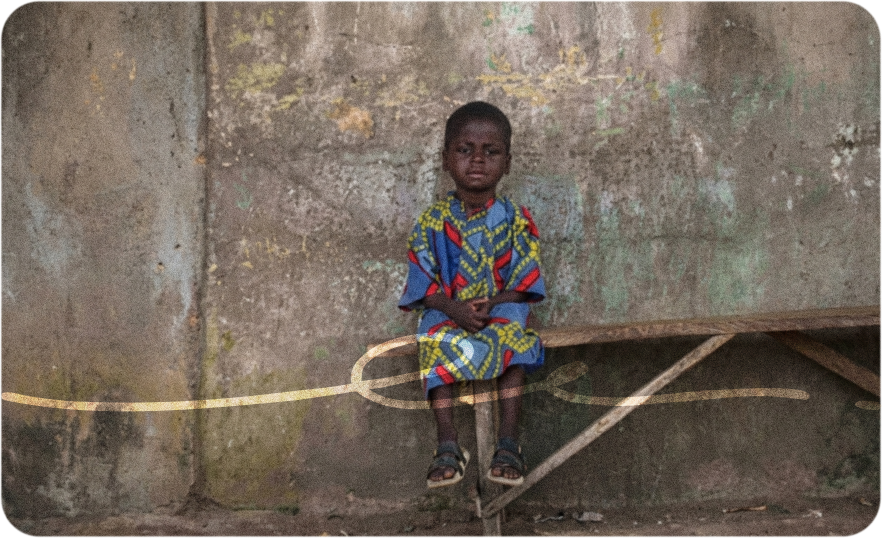
There is a saying that goes: “If you push Nigerians to the wall, they will use their backs to break the wall for you, so you keep pushing them".
It is said with laughter. This is important. The laughter is not nervous or embarrassed. It is the laughter of people who have looked honestly at themselves and decided it is funny. Which is either wisdom or surrender, and sometimes it is indeed hard to tell which.
The average Nigerian has a remarkable understanding of God's timing. Not faith exactly, though faith is part of it. Something more specific than faith. A belief that the correct response to a bad situation is to document it carefully, discuss it thoroughly, and then pass it upward. To God. To the universe. To whoever is handling that department. The idea that one might personally intervene, show up, vote, march, refuse, or obstruct is not rejected outright. It is simply not the first instinct, and over time, it becomes the only one.
Consider the politics.
For every election year, the conversation started the year before. By September, it is loud. By December, the message is urgent: this time is different, the country is at a turning point, your vote is your voice. People share graphics. They argue in group chats at eleven at night. They explain, in careful detail, what is at stake. A week before election day, someone's uncle in the chat sends a voice note asking God to punish anyone who votes for the wrong party, the wrong being defined as any party other than the one the uncle prefers. The voice note gets forty-seven thumbs up. On election day, the turnout in Lagos, a city of more than 15 million people, is around 30%.
The wall does not break. The wall does not even know anyone is leaning against it.
What makes docility complicated in the Nigerian case is that it does not look like what docility is supposed to be. It is not quiet. The noise level is extraordinary. There are opinions everywhere, stated with great confidence and real emotion, at volume, at length, at any hour. The docility is somewhere beneath the noise, in the space between opinion and action. A Nigerian will tell you exactly what is wrong with the country, who is responsible, what should be done, and what will happen if nothing changes. Then nothing changes.
There is a word for this in some circles: performative resistance. The position without the step. The raised fist that is also, somehow, still in the pocket.
But there is something else operating too, and it is worth sitting with before writing the whole thing off. People do not become docile in a vacuum. Decades of watching those who came forward get stepped on will change a population's risk calculation—the math changes. Showing up costs something real. Not showing up costs something, too, but the cost is shared across everyone, spread thin, and harder to feel on a particular Tuesday morning when the queue is long, the sun is already hot, and there is a bus to catch.
So the wall stands. The backs press into it, accommodating, adjusting, finding the comfortable angle.
And somewhere in a church three streets over, a pastor is asking God to handle it.
The congregation says amen.