
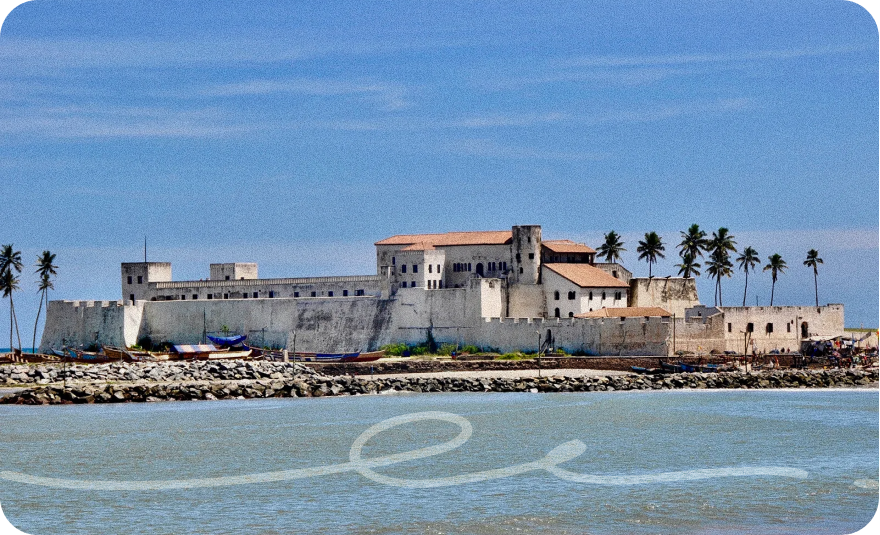
I stood before the sea at Elmina in May, 2024 and found myself staring at more than water. The waves moved with a quiet rhythm, beautiful and almost calming, yet there was a heaviness that settled in my chest. This body of water carries stories too painful to forget. Countless Black souls passed through these shores, many never returning home, many perishing under the brutal machinery of the transatlantic slave trade. Standing there, I was not just a visitor; I was a witness to history.
My visit to Elmina Castle was not simply tourism. It felt like stepping into the pages of a story that generations before me had carried in fragments, stories whispered through memory, grief, resistance, and survival. Built in 1482 by Portuguese traders, Elmina Castle was the first European slave-trading post in sub-Saharan Africa. Over time, it became one of the most significant transit points in the trafficking of enslaved Africans. Within those walls, thousands of people were confined, stripped of identity and dignity, and forced into unimaginable conditions before being sent across the Atlantic.
History often reaches us through statistics. We hear numbers: millions enslaved, thousands transported, centuries of exploitation. But numbers can create distance. They can make suffering feel abstract. It is different when you stand in a place where history happened. It is different when you walk through narrow dungeons where human beings once fought for breath. It is different when you stand before the "Door of No Return" and realize that for many, it was the last glimpse of home they would ever see.
What struck me most was the silence the castle held. Not the absence of sound entirely as there were tourists moving around and guides speaking, yet there was another kind of silence, one that seemed to linger in the walls themselves. The silence of stories interrupted. The silence of dreams stolen before they had the chance to unfold. I wondered about the children who passed through these grounds, the mothers, the young people with ambitions, fears, and hopes not unlike ours today.
As Africans, and particularly as young people, we often speak about the future we want to build. We discuss leadership, development, innovation, and progress. Yet places like Elmina remind us that understanding our future also requires confronting our past. Memory matters. History matters. Not because we should remain trapped by them, but because remembrance is a form of resistance. Forgetting creates room for repetition.
My visit to Elmina Castle reminded me that resistance did not begin with our generation. We are descendants of people who survived displacement, violence, and unimaginable hardship. We are here because those before us endured. Their survival is woven into our existence.
As I stood before that body of water, grief and gratitude sat side by side within me. Grief for lives lost and gratitude for the strength that endured despite it all. The sea moved as though nothing had happened, but history remained. And perhaps that is our responsibility, to remember what the waves cannot say aloud, to remember the lives of our ancestors buried in the Atlantic Ocean and the millions traded as commodities.
Our history remains woven into who we are, reminding us that we come from a lineage of survival. These are the echoes Elmina still holds.