
In many rural communities across Nigeria, livestock and crop farming exist in a delicate and often uneasy balance. I grew up witnessing this tension firsthand. It was not uncommon for farmers to wake up in the morning and find that a season’s worth of crops had been destroyed overnight by roaming cattle. Water sources were sometimes contaminated by livestock waste, and disagreements between farmers and herders occasionally escalated into serious conflicts. For many families, these incidents meant not just frustration, but the loss of their primary source of livelihood.
For generations, open grazing has been the dominant livestock production system across many parts of Africa. Herders move their animals across long distances in search of pasture and water, following seasonal patterns that once sustained both livestock and rural communities. When land was abundant and populations were smaller, this system functioned with fewer tensions. Today, however, the context has changed dramatically.
Rapid population growth, expanding farmland, urbanization, and the effects of climate change have significantly reduced the availability of natural grazing lands. In many regions, desertification and unpredictable rainfall patterns have made pasture increasingly unreliable. As a result, livestock farmers often struggle to find adequate feed for their animals, especially during the dry season. This scarcity forces animals to roam further in search of pasture, increasing the likelihood of crop destruction and conflicts with farming communities.
At the heart of this issue lies a fundamental challenge: the growing shortage of sustainable livestock feed.
Without consistent access to nutritious feed, livestock productivity remains low. Animals lose weight during harsh seasons, milk production declines, and farmers face economic losses. Many livestock farmers rely heavily on natural grazing because commercial feed is expensive and often inaccessible to smallholder producers. This dependence on natural pasture makes livestock production vulnerable to both environmental and social pressures.
If Africa is to build a more sustainable livestock sector, it must begin to rethink how animals are fed.
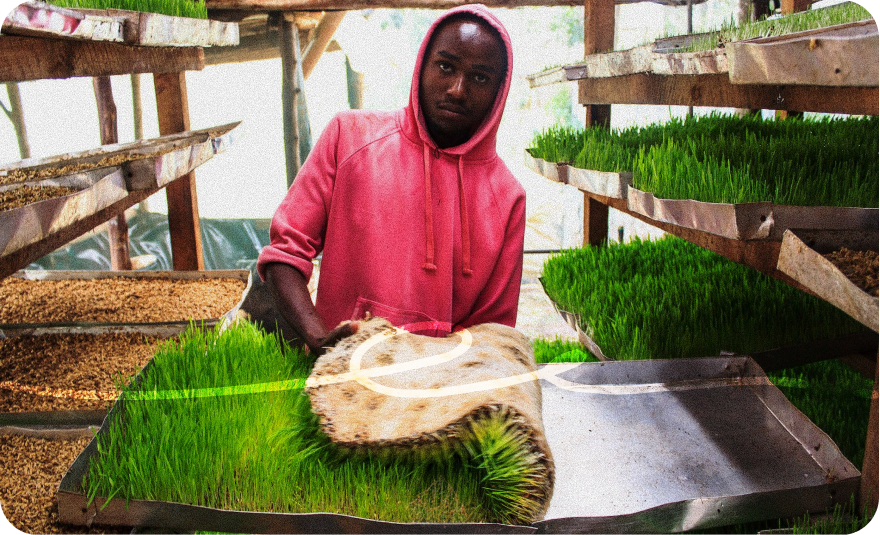
One promising solution is hydroponic fodder production. Hydroponic fodder involves growing fresh green feed from grains such as maize, wheat, or barley in a controlled environment using minimal land and water. Within seven to ten days, the grains sprout into thick mats of nutrient-rich fodder that can be fed directly to livestock. The process does not require soil and can be carried out in relatively small spaces, making it suitable even in areas where land is limited.
The benefits of hydroponic fodder extend beyond efficient land use. Livestock fed with fresh hydroponic fodder often show improved digestion, better weight gain, and increased milk yield. Because the feed is produced in a controlled environment, farmers can maintain a consistent supply throughout the year, regardless of seasonal changes. This stability reduces the need for animals to roam in search of pasture and allows livestock to be raised in more confined and manageable systems.
For countries like Nigeria, where tensions between crop farmers and livestock herders have become increasingly frequent, such innovations could offer a pathway toward more peaceful and sustainable agricultural systems. By enabling livestock farmers to produce feed locally and consistently, hydroponic fodder supports a gradual transition from extensive open grazing toward more intensive and climate-resilient livestock farming practices.
However, technological innovation alone cannot transform livestock systems at scale. Policy intervention will also be essential. The adoption of hydroponic fodder systems in Nigeria could accelerate significantly if the government enforces a nationwide ban on open grazing while promoting sustainable livestock feeding alternatives. When unrestricted grazing becomes limited, livestock farmers will be more likely to explore reliable and controlled feeding systems that protect both their animals and surrounding farmlands.
At the same time, farmers will require access to training, affordable technology, and financial support to adopt these innovations successfully. Agricultural extension services, youth-led agribusiness initiatives, and private sector investment can all play important roles in expanding climate-smart livestock feeding solutions across rural communities.
Across Africa today, a new generation of agricultural entrepreneurs is already working to address long-standing challenges within food systems. From climate-smart irrigation to controlled-environment farming, these innovations demonstrate that African agriculture is capable of adapting to changing realities. Livestock production must also evolve in similar ways.
The future of livestock farming in Africa will not depend solely on how animals are raised, but also on how they are fed. As land becomes scarcer and climate pressures intensify, solutions that produce more feed using fewer resources will become increasingly important.
Hydroponic fodder may not solve every challenge facing Africa’s livestock sector. Yet it represents an important step toward reimagining livestock production for a more sustainable future. By combining innovation, supportive policies, and local entrepreneurship, Africa can move toward livestock systems that are more productive, environmentally responsible, and less prone to conflict.
In doing so, the continent can build agricultural systems that not only feed growing populations but also foster stability and resilience within rural communities.