"Mama, I get am, come check my shop.”
The voice comes quick, confident, almost too certain for one who does not own a shop. Mrs. Edukpon pauses. She has been walking through the market for over half an hour now—scanning, pricing, comparing. She knows roughly what she wants, but what’s really stressing her is a particular product; she doesn’t even know where to get it, let alone where to get the best deal.
That is where the voice comes in again. "Mama, no worry, I get am for carton; come check my shop,” says my boyhood friend, Etim.
She turns slightly, measuring the speaker. The boy—because he looks no older than his mid-twenties—doesn’t point to a shop. Yet, there is no hesitation in his tone.
“No, you will not have it,” she blurted out.
“Ma, even you will not have it? I have it; it's in my shop,” he said, casually yet seriously enough to draw her attention.
"Really? Do you think you will have what I’m looking for?” Ma-ma asks.
Etim smiles. “Even if it’s a trailer load of it, trust me, I'm going to deliver, Ma."
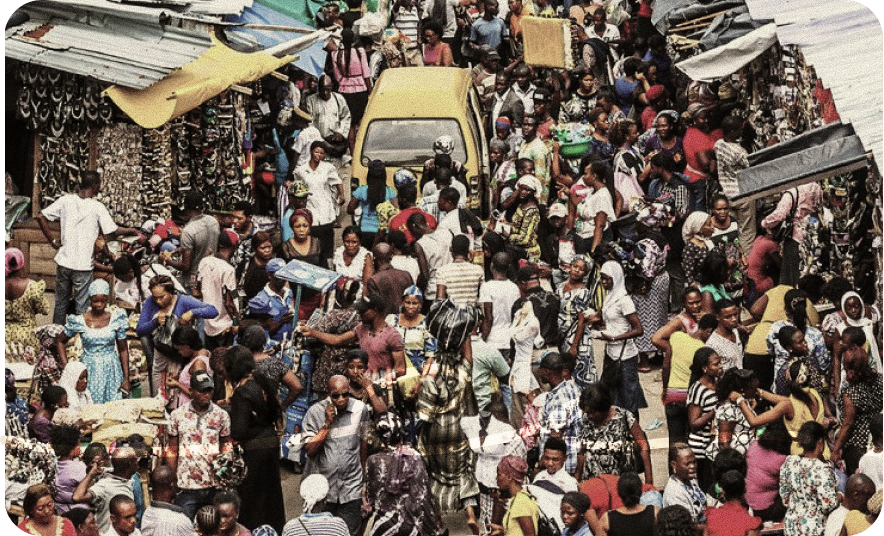
The negotiation has already started long before the price is mentioned. They walk together now, not as buyer and seller, but as something more seamless. Etim leads. Ma-ma follows, but not blindly. While they walk through the stalls at Ariaria International Market in Aba, Abia State, every sentence is a test. Every response is a signal.
“If you know you don’t have this stuff, don’t come and stress me. I have spent more than thirty minutes in this market, looking for this product.”
“Na, how much is Crusader soap, fess, fess?” she finally asks.
“Seven thousand per carton only.”
“Seven gini?” Haaa!!, oga. Is it not five thousand? Naso, I dey buy am.”
It is a familiar act. Neither of them is surprised. Etim didn’t argue directly. Instead, he shifts the ground. “Ma, how many cartons do you want to carry?”
“Five for now,” she replies, then adds casually, "If it's good, I go dey send my boy come here. But na five thousand I dey always buy am.”
This is not just negotiation. It is positioning. She is not just asking for a lower price—she is offering future business patronage, creating the illusion of continuity.
Etim nods, but he doesn’t yield. "Mama, things don change. Price don add, everything don cost.”
Another pause. Another recalibration from both ends.
“Okay,” Mama says, softer now. “Make it six thousand.”
The boy exhales and hesitates. “Ahh… Mama, e be like say you wan cheat me. I no go gain anything for that price.”
But he does not walk away. Because walking away ends the game, staying in it keeps the possibility alive. She studies him for a second, then raises the stakes.
“I'll take ten cartons.”
That changes everything. Volume enters the conversation, and with higher quantity comes flexibility. Etim nods slowly. Stepping into the cool dimness of the shop, she was led in by Etim and was offered a seat. As her eyes adjusted to the change in light, she noticed an older man seated in the far corner. The elder was hunched over a ledger, his focus absolute. He only lifted his head for a brief second to acknowledge their greetings with a sharp nod before returning to his work.
Etim’s grin didn't disappear, but it changed—it became the smile of a man who knew he held all the cards. He didn’t answer immediately. Instead, he took a small cloth and began to polish a spot on the goods that was already spotless.
Within minutes, ten cartons are brought out from a shop that was never initially his. Payment is confirmed. Goods are loaded onto a wheelbarrow. Mrs. Edukpon leaves satisfied, convinced she has negotiated a fair deal.
Etim returns to the elder seated at the corner, who is the shop owner. He hands over ₦50,000 to him, while Etim keeps ₦10,000. No contract was signed. No commission rate was agreed beforehand. No formal role was assigned. Yet, the transaction is completed successfully.
This is often called a middleman, but in the books of our cultural heritage, it is called Igba Oso-Ahia. Oso-Ahia is an informal trading arrangement where individuals without shop ownership leverage, negotiation skills, market knowledge, and social access generate profit, operating within, but not owning, existing commercial infrastructure. In business terms, this role blends concepts like arbitrage—profiting from price differences across sellers and buyers—a broker, which is connecting parties for a fee; and affiliate marketing, where value comes from linking products to new customers. And yet, while Osoahia shares these features, it is still rooted in the local context and traditions that shape how trust, access, and profit move through African markets.
What happened here is not simply bargaining. It is a system that operates quietly within the visible structure of our African markets, also known as open market affiliate marketing. The shop owner owns the goods. Mrs. Edukpon owns the demand. But Etim? He owns the space in between.
The key lesson is clear: true value can be created without owning any physical asset. Mastery of relationships, access, negotiation, and timing allows entrepreneurs like Etim to create opportunities and profit by connecting needs with solutions. In modern business, understanding how to generate value from what you know, who you know, and how you act can be just as powerful as asset ownership.
In Oso-Ahia, profit lives in the gap between what something costs and what it can be made to mean. Etim does not produce. He does not stock. He does not even set the original price. Yet, he creates value by doing something both simple and complex. He connects. But more than that—he interprets. He reads urgency. He understands the seller’s threshold. He manages perception on both sides, stretching price without breaking trust. The ₦1,000 difference per carton is not arbitrary; it is earned through timing, language, confidence, and presence.
This is why Oso-Ahia cannot be reduced to commission work. Commission is fixed; Oso-Ahia is seamless. "Commission" is defined. In Oso-Ahia, it is negotiated in real time. Price here is not a number. It is conversation, convincing, and conversion. The ability to keep a conversation going to build trust, then transcend into convincing the buyer—"But here I am, your best plug; you can count on me for the best deals, fair prices, and competency to deliver as wanted at your own agreed price, while protecting my interest to a considerable profit percentage"—is conversion.
What makes this system even more remarkable is that it requires no ownership. Etim has no shop, no inventory, and no formal entry into the market. Yet he participates fully—and profits meaningfully. This challenges a deeply held assumption in conventional economics: that value must be tied to assets.
In this institution, value is tied to access. Access to buyers. Access to sellers. Access to information. And most importantly—access to trust and reputation. Because without trust, the system collapses. The shop owner must trust that Etim will not undercut him. Etim must trust that the owner will honor the base price.
While the shop owner holds the ledger, the market holds Etim’s name. If he fails the conversion or cheats the interest, he doesn't just lose money; he loses his "right of way" in the streets of Ariaria International Market.
By the end of the day, everyone walks away satisfied and believes they negotiated well. The shop owner moves his inventory. Etim earns his informal economic advantage, ₦10,000, without owning anything, not owning anything per se, but through an invisible structure.
Another day in the market. Another transaction completed—another invisible system at work. And if you are not looking closely, you will miss it entirely. Because some of the most important roles in the African market are played by people who do not officially exist within it.
In the world of Oso-Ahia, it is a conversation that is convincing and converts. And for those who know how to speak the language, the market offers a seat in its ecosystem to them, even when they don't have a shop.