An illusion is a misperception of something real where your senses receive actual stimuli but your brain processes them inaccurately.
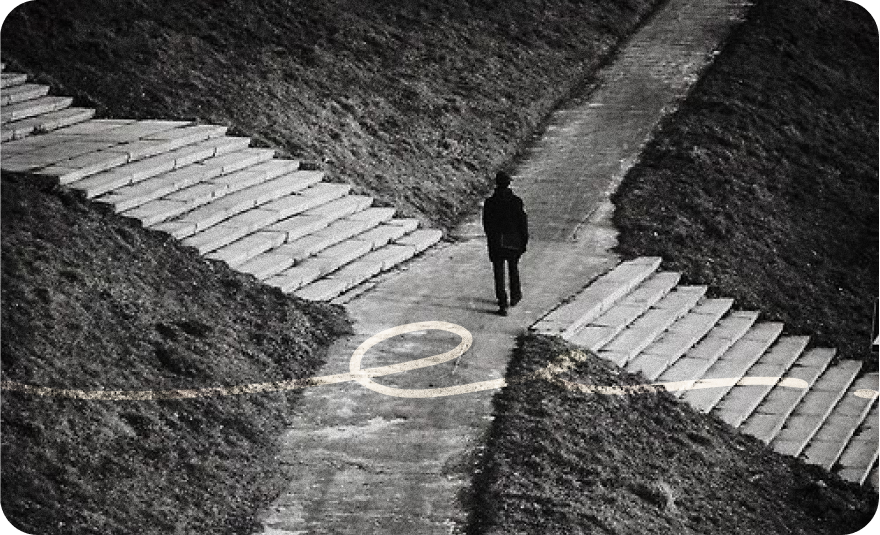
Choice is the act of selecting between two or more possibilities it's the moment where alternatives exist and a decision is made to pursue one over others.
The illusion of choice is when you appear to have options, but those options are either meaningless, predetermined, or controlled in a way that makes genuine freedom absent you feel like you're choosing, but the outcome is essentially the same regardless.
Do people who grow up in poverty experience the illusion of choice?
The poverty trap as structured illusion
People growing up in poverty are often told the same story as everyone else "work hard, make good choices, and you can achieve anything." This narrative implies genuine choice exists equally for all. But the reality is that poverty systematically narrows the menu of available options while making it feel like a personal failure when you can't escape it.
How the illusion operates in poverty
Survival mode eliminates long-term choice
When your immediate needs food, safety, shelter are uncertain, your brain is consumed by the present. Research by economists Sendhil Mullainathan and Eldar Shafir shows that scarcity itself consumes cognitive bandwidth. You're not lazily making bad choices your mental resources are genuinely occupied by crisis. The "choice" to plan for the future becomes almost neurologically unavailable
School is presented as the great leveller the path out. But the quality of education is often tied to the wealth of the neighbourhood you were born into. Two children "choosing" to study hard are not operating on the same lane at all.
Who you know, how you speak, how you carry yourself, what networks you can access these are largely inherited most times if we are using a scale of 100% I'll say 85%.
A wealthy person's child walks into opportunities through doors that were opened before they arrived. A child from poverty often doesn't know those doors exist.
Even if they get to know how do they approach it?
A prisoner offered the choice between a small cell or a slightly larger one has formal choice but no substantive freedom.
Thinkers like Noam Chomsky argued that manufactured consent works precisely this way populations are given enough apparent choice to feel free, while deeper structural decisions are made far beyond their reach
learned helplessness
When people repeatedly experience that their choices don't change their outcomes, they eventually stop believing choice matters at all.
Why would someone in poverty spend money on things that seem unnecessary? Because when you have no safety net immediate pleasure or relief is one of the few things genuinely within reach.
To say poverty is entirely an illusion of choice risks stripping people of agency entirely and many people do make remarkable choices under crushing conditions that change their lives. Human resilience is real.
So perhaps my honest opinion is that,People in poverty have real agency, but that agency operates within walls so high and so invisible that calling it free choice is deeply misleading.
Two equally hardworking people from poverty can have wildly different outcomes based on who they happen to meet, where they live, what opportunities randomly cross their path, their health, timing, and luck.
Society celebrates the ones who "make it" as proof of hard work while quietly ignoring the majority who worked just as hard and didn't.
Let's analyze two individuals, both from poor background.
One has the mindset that he'd work to get out of his current situation,the other believes since he is poor people who are well to do should give him free gifts.
Now the one who works hard
The illusion he risk falling into is believing that effort alone determines outcome.
So the hardworking person may be making a genuinely empowering choice but if he believes success is purely a product of his effort, he's partly living in an illusion too. One that society actively encourages because it justifies the system.
The one waiting for goodwill
Now this person is more complicated .
First, where does that mindset come from?
It rarely comes from nowhere. It often comes from
Watching effort go unrewarded for generations in their family
Learned helplessness from repeated disappointment
A cultural or community narrative that survival depends on patronage and connection rather than individual effort
Sometimes even religious or traditional institutions idolizes waiting and humility as virtues.
So in some ways, their passivity is itself a response to experience and a pinch of laziness or delusion.
The rich generally did not get or stay rich by giving it away freely
Goodwill from those with power almost always comes with strings ,dependence, obligation and control
It places your entire future in someone else's hands. which is perhaps the most complete illusion of choice .
So who has it right?from our two subjects?
One is running hard inside a maze, believing the maze is fair.
The other has sat down in the maze, believing someone will carry them out.
Both are responding to the same broken reality just with opposite psychological strategies.
Poverty doesn't just limit your physical options. Over time it shapes how you think about possibility itself. One person concludes "I must do everything myself" the other concludes "nothing I do matters." Both conclusions are understandable. Neither is completely free.
The question I'd throw back at you
Do you think the person waiting for goodwill has chosen that posture or was it gradually built into them by their experience of the world?
To water it down do you think as a Nigerian you have free will to vote or it is just an illusion of choice?
I have established that An illusion is something that appears real or true, but actually isn’t.
Then,The illusion of choice is when freedom is presented, but control is hidden.
We are presented with the illusion that our vote counts.
During election it's the exact opposite.