
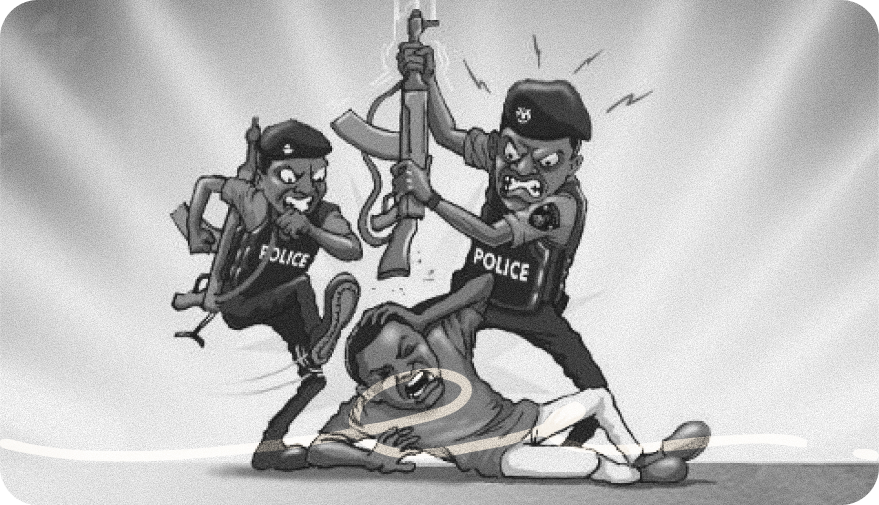
For millions of Nigerians, a police encounter is not a source of safety, it is a source of dread. The killing of Mene Ogidi in Effurun, Delta State, on April 26, 2026, has once again forced the country to confront an ugly, persistent truth: that the very institution meant to protect ordinary citizens has, for too many, become something to fear.
Ogidi, a 28-year-old aspiring musician, was not armed. He was not resisting. He was making a delivery. When officers found a firearm in the package he was carrying, he was subdued, tied to the ground, and pleaded to lead the police to whoever had sent it. Instead ASP Nuhu Usman shot him anyway at point-blank range, in broad daylight, while bystanders watched and recorded the whole scene. The footage, which went viral days later, was not just disturbing. It was familiar.
That familiarity is the real tragedy. Nigerians have watched videos like this before. They have held candlelight vigils, trended hashtags, filled streets in protest. The 2020 #EndSARS movement was perhaps the loudest collective cry against police impunity the country had ever seen and yet, in 2026 nothing change, officers are still executing unarmed civilians on roadsides as if accountability were optional.
The impact on ordinary Nigerians goes beyond grief. It shapes behaviour. Traders in cities all over Nigeria have learned to carry extra cash at checkpoints, motorcycle riders and taxi drivers carry change in their pockets while passing through checkpoints to avoid harassment or delay, Young men especially in southern states are usually targeted by the police in the guise of looking for yahoo boys, they end up being threatened or extorted by this cops. A journalist covering a peaceful protest in Lagos in January 2026 nearly choked on teargas while repeatedly identifying herself to officers. Even bearing press credentials offered no protection.
This is what unchecked police brutality does: it quietly dismantles the social contract. When citizens cannot trust those sworn to protect them, fear creeps in, they withdraw from public life, from institutions, from hope in the system. The psychological toll is immense, particularly for youth who came of age during #EndSARS and now watch history repeat itself.
To be fair, there have been consequences in the Ogidi case. ASP Usman was arrested, dismissed, and faces prosecution. The Delta State Commissioner of Police publicly condemned the shooting. These are not nothing. But reactions should not require a viral video. Justice should not depend on whether a bystander had their phone out.
What Nigeria needs is not just individual punishment, it is structural reform: independent oversight of police conduct, swift and transparent prosecution of officers who abuse their power, and a genuine cultural shift within the force that treats civilian lives as inviolable.
Until then, every Nigerian who steps outside carries an invisible weight , the knowledge that the badge that should protect them might, on any given day, threaten them instead.