
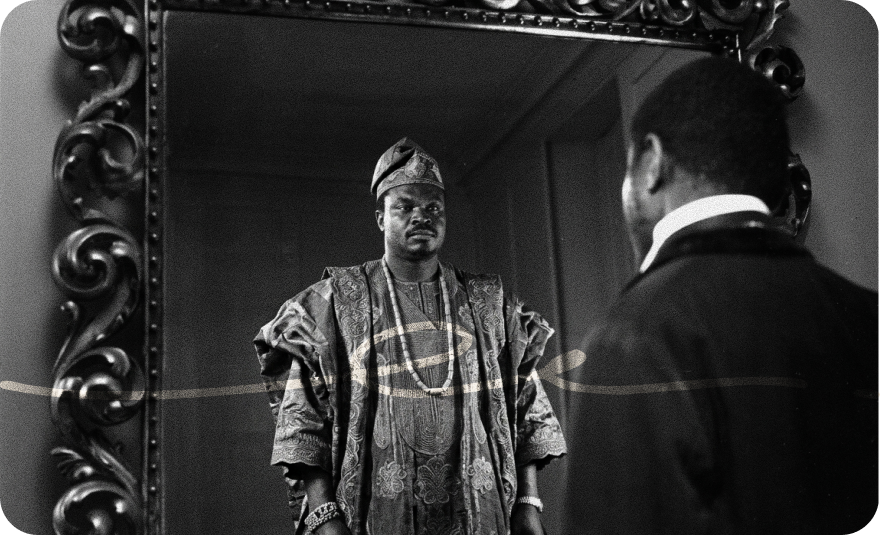
It is often said that knowing the problem is already half the solution. But it amazes me how we not only know our problems—we are also fully aware of their solutions—yet we vehemently refuse to solve them, choosing instead the easier path of endless complaints.
Is enchantment really a thing? Have we been placed under some kind of spiritual shackle of dysfunction? Or are we simply like the proverbial man who covers his own eyes and then screams that everywhere is dark?
Perhaps we can excuse those who have never experienced a working system—those who have lived their entire lives within a broken one and have come to accept it as all that exists. Their desires may remain abstract, with no frame of reference beyond dysfunction. But what about those who have seen better, lived in functional systems, and still refuse to stand for light—worse still, they project even deeper darkness?
Election seasons, rather than serving as opportunities to intentionally secure a better future for the common man, have become periods that expose two tragic realities: the ungodly unity of the elites and the profound foolishness of the masses.
For three years or more, we are united in complaints—hardship, hunger, suffering, and the lashes of a failing system. Yet, the moment an opportunity arises to change the narrative, we divide ourselves along tribal, religious, and party lines.
Competence no longer matters. As long as the leader is “our own,” we defend incompetence with passion. It does not matter if the nation burns—so long as he speaks our language or worships as we do. The failures of those in power are excused as loyalty to party.
But who truly bears the consequences?
The widow selling pepper in Ochanja Market, who can no longer afford two meals a day.
The security guard at Fidelity Bank in Gwagwalada, who cannot provide for his family, let alone pay school fees.
The civil servant in Lagos, for whom decent housing remains a distant dream.
The patients dying daily in LASUTH due to understaffing and failing healthcare infrastructure.
Abdul, Obinna, and Yemi have all lost their fathers—men who died fighting Boko Haram—because funds meant to properly equip the military were looted by a corrupt political class. Basic social amenities have now become luxuries.
Listing these problems is merely repeating what we already know and witness daily. What truly astonishes me is our collective complacency—our unwillingness to change the narrative.
What does it really cost to stand for truth and the common good?
National corruption is but a reflection of our individual corruption and inability to speak and stand for the truth; it is a reflection of our individual selfishness.
And sadly, our price is embarrassingly cheap: a bag of rice, ₦5,000, ₦10,000—and we willingly renew our contract with poverty and suffering for another four years.
We do not think about our wasted youth or the future we are destroying for our children.
In a few months, the political atmosphere will heat up again. Emotions will rise, and the waters will be stirred. When that time comes, do not take a stand based on tribe, religion, or party.
Think beyond now. Think about your child, your grandchildren, and generations yet unborn—up to the seventh generation. Your decision will shape their reality. The leader you choose is a reflection of you.
If we must have the country we claim to desire, then we must stop complaining and start applying the solutions that we all know—except maybe we are all just pretending not to be happy.
We can either take a stand individually or continue to collectively enjoy our woes as a nation.