
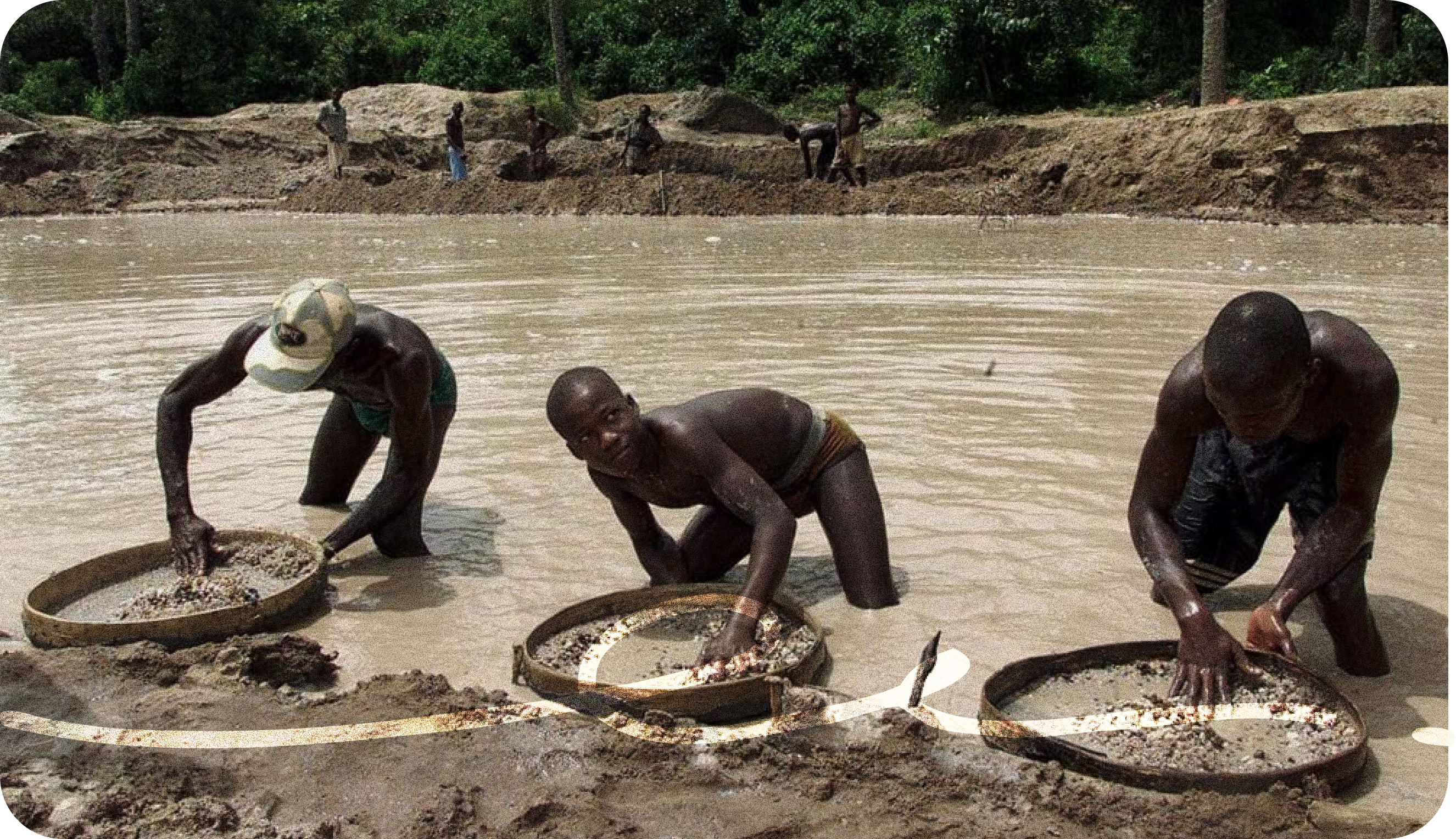
In my community, the earth does more than hold precious stones—it holds stories. Stories of boys who left school too early, of families drawn to quick money, and of lives that ended beneath the same soil that promised wealth. What should have been a blessing has, for many, become something far more dangerous.
Not long ago, a young boy in my area stopped going to school. Like many others, he had discovered the lure of mining. Each day, instead of sitting in a classroom, he joined older men at illegal mining sites, digging deep into the ground in search of stones that could be sold for instant cash. To him, education felt slow and uncertain; mining felt immediate and rewarding. He was not alone. Across the community, more youths and even minors are making the same choice.
This shift reflects a deeper problem. Nigeria is richly blessed with natural resources, yet in places like mine, these resources are accessed in ways that create more harm than opportunity. Illegal mining, driven by poverty and weak regulation, has turned what could be a source of sustainable development into a cycle of risk and loss. The ground is dug deeper each day, but the future of those digging it grows increasingly shallow.
The dangers are not abstract—they are real and recurring. Mining pits, often unsupported and poorly constructed, collapse without warning. There have been instances where young men were buried alive, their bodies trapped beneath layers of earth that gave way too easily. Each incident sends waves of fear through the community, yet it rarely stops others from returning to the same sites. The promise of quick income continues to outweigh the fear of death.
Beyond the immediate physical risks, illegal mining is quietly reshaping values. It normalizes the idea that survival depends on speed rather than sustainability. Young people begin to measure success not by skills acquired or knowledge gained, but by how quickly they can earn. Over time, this erodes the importance of education and long-term planning, leaving many trapped in a cycle where today’s gain becomes tomorrow’s limitation.
This is not simply a failure of individuals; it is a failure of systems. When opportunities are scarce, and when communities lack access to structured livelihoods, people turn to whatever is available. Illegal mining thrives in these gaps—where governance is weak, where enforcement is absent, and where young people are left to navigate their futures alone.
Yet, this reality is not fixed. It can be changed.
Addressing illegal mining requires more than restriction; it requires redirection. Young people need viable alternatives that are both accessible and sustainable. Skill acquisition programs, community-based enterprises, and investment in sectors like agriculture can provide pathways that do not demand risking one’s life for daily income. With the right support, the same energy currently poured into mining can be channeled into building stable and meaningful livelihoods.
At the same time, stronger regulation and community awareness are essential. Families and local leaders must begin to confront the long-term consequences of illegal mining, not just its short-term rewards. When people understand that the true cost of these stones includes lost education, broken futures, and preventable deaths, the narrative can begin to shift.
Nigeria’s natural resources are often described as a blessing. But a resource that pulls children out of school, endangers lives, and limits the future of a community cannot be called a blessing without question. The value of any resource lies not in its existence, but in how it shapes the lives of those who depend on it.
If the ground continues to give wealth while taking lives, then the real question is no longer what lies beneath it—but whether we are willing to protect what lives above it.