
*You don’t like prayer?”
“So you are among those who are against God?”
Abi, you be witch because if you no be witch.
Why you go dey complain say my prayer dey disturb you?
Nah, only you dey this compound; why e come be say nah only you dey complain?
Mama Ojubi, if them send you come my side this morning, holy ghost fire!!!
Sorry, ohh Eka Ndoni, but no be my fault say your God no dey hear nah
So for night wey people dey try sleep, nah, you go dey shout for am,
Dey command am, make him kill this one, and fire that one every night: fire, fire; die, die.
Nah, the issue wey, we dey try settle be this since morning.
As their voices continue to vibrate across the compound, from one accusation to a counterresponse.
Just as the echoes of their yelling at each other begin to fade, a deeper truth starts to surface from the quietness.
Spirituality in this part of our world is not private. It breathes, it echoes, and spills into shared spaces.
Streets are in awe of not just the sounds of traffic but of prayer—fervent, loud, and insistent.
It is devotion made audible. A fervent prayer is not always just a loud prayer;
It is presence, identity, and even power. To some, it signifies spiritual intensity.
a visible, vibrant, and audible proof of faith.
In most of our urban cities, where life is already hard with the demands of adulthood, sound becomes more than noise at times—it becomes territory.
For some, it is a spiritual fortress; for others, it becomes an intrusion, an uninvited occupant of their mental space. It is a vibration that stays in the ears long after the voice has stopped, the ghost of a sound that refuses to let the mind find its own center.
Yet within this same shared sound landscape, another reality quietly struggles to exist:
The human need for tranquility and the natural sound of nature or quietness.
Therefore, when discomfort is voiced, it is rarely received as a simple request. It becomes something else.
What could have been addressed by a conversation or simple dialogue becomes confrontational with a touch of enmity.
The conflict is clear: the right to worship versus the right to peace. Not a battle between light and darkness, but a friction between the right to call upon the Heavens and the right to find Heaven in a few hours of undisturbed rest.
When these two goods collide, empathy is the first casualty, replaced by the armor of suspicion, attack, and defense.
The mistake is believing one faith's expression must silence others' need for quiet.
When spirituality loses its sensitivity to others, it risks becoming performance rather than connection.
This cuts across not just prayers but also the local bar in the street.
The neighbor who can't sleep without loud music on, or
Even generator sounds, when they go off, you hear remarks like
*"Thank God, ohh, omo, which kind of gen, wey want block person ear since?"
Nawa, oh, if person complain now, e fit cause wahala or him turn enemy of progress.”
People want to hear themselves, their minds, and their own thoughts, and it is impossible in such an environment.
When the external world is noisy, the internal world begins to fray. The spirit becomes exhausted from a conflict it never requested to fight. And the mind turns into a congested space where no one can sit to reason peacefully, failing to see that calm is the fertile ground for insight and clarity.
However, understanding is not out of reach—it simply requires intention. Because, beyond all structure, the real solution is human.
The ability to recognize that just as one person finds true meaning in audible prayer, loud music, or noise, another finds sanity in the tranquility and peace of nature.
Neither is wrong. Both are valid. And both deserve space. It begins with something simple, yet rare:
Respectful communication. A neighbor who speaks not with accusation, but with honesty. Another who listens not with defensiveness but with openness.
In that exchange, something shifts. The problem is no longer “you versus me,” but “how do we live better together?”
Harmony is not achieved by eliminating differences but by managing them. It is a quiet negotiation, a daily give-and-take. It tasks each person to step slightly outside themselves—not to abandon their beliefs, but to soften their impact.
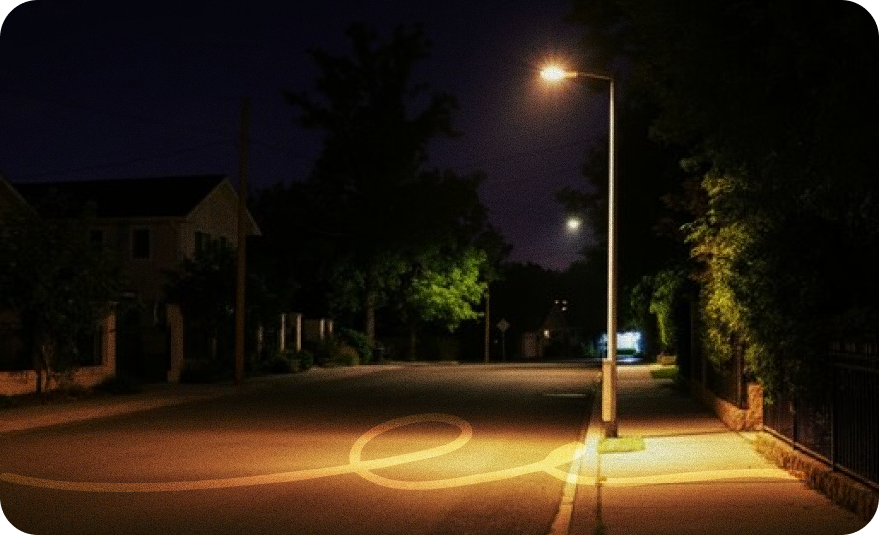
Mindfulness of volume—especially in early mornings or late nights—can protect rest without silencing devotion.
Because a truly spiritual community is not the loudest one.
It is the one where devotion and consideration exist side by side—where faith doesn't cause war or compete with peace but coexists with it.
In the end, perhaps the most profound prayer one can offer a neighbor is the gift of a quiet night.