We have a defining problem. Not a problem in the normal sense, but a defining syndrome. Its symptoms include unnecessarily long contact names, painfully straightforward descriptions of relationships, and the special ability to reduce a person's entire identity and existence to one memorable detail.
This explains why you'll find contacts such as "Taye Gas Man Cheap", "Auntie Fuschia Pink Lace", and "Aminat ShopRite" on people's phones.
There is the millennial version that promises the best mix between our indigenous languages and broken English. Names like "Bogondi Aso-Oke Lagos", "Tunde Mekanik", or "Chinedu POS Guy".
Add a bit of new-age creativity and things become even more interesting. Suddenly you have contacts named "T-Prints", "Weird Nigga 2.0", "Do Not Call", "This Idiot", and the ever-mysterious "Don't Pick".
It is chaotic, strangely efficient, and somehow familiar.
If you ask me, this practice stems from a place of certainty rather than uncertainty. Nigerians, and perhaps many Africans in general, do not like assumptions. We prefer facts. Rather than assuming someone is your friend, acquaintance, tailor, mechanic, or distant cousin, we attach a label that permanently solves the problem.
"Aminat ShopRite" immediately tells you where you met her.
"Kunle Plumbing" tells you exactly why he exists in your contact list.
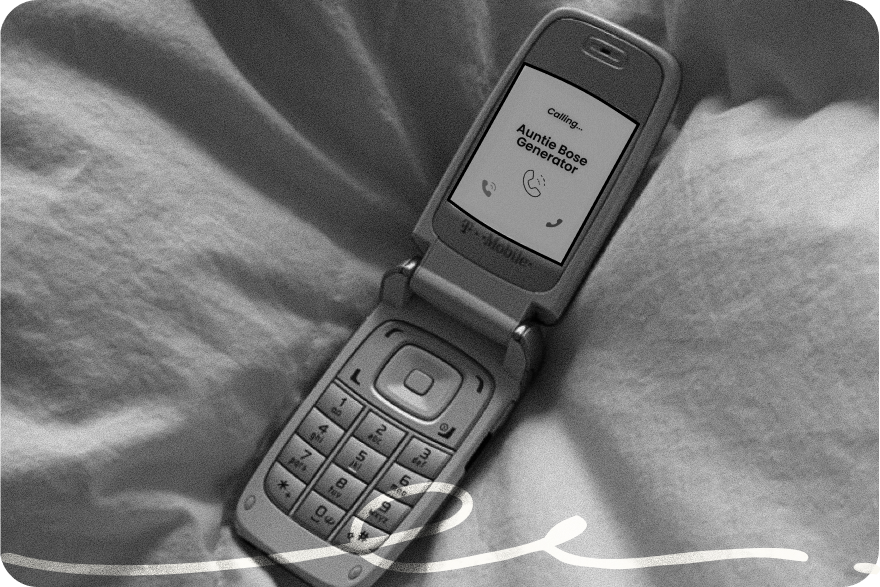
"Auntie Bose Generator" may not tell you her surname, but it tells you everything you need to know.
The contact name becomes a miniature biography that answers questions of why, what and where.
The funny thing is that these names are usually created with no malicious intent. In fact, they are usually done as acts of convenience. At the time the number is saved, you are convinced you will remember the person's actual name later. You never do. Or You simply conclude that it's serving its purpose to make you remember everything you'll need.
So the description remains.
Days become months. Months become years.
Before you know it, a fully grown adult has been living in your phone as "Man With White Camry" since 2019. In your defense you'll always remember the dark skinned brother who thought his one hand on the starting wheel was enough to sweep you off your feet, I guess not.
The real danger comes when the script is flipped.
Nothing prepares you for the emotional damage of discovering what someone has saved your number as.
Finding out you are saved as "Adebayo John" or "John Uni" by someone you consider a close friend feels strongly painful. There is no obvious insult, yet it somehow tastes like cement on the tongue.
You start asking uncomfortable questions.
"Is that all I am to you?" Um, maybe.
"After everything we've been through, I'm just 'John Uni'?" Yes, John Uni.
Meanwhile, your own contact list contains names like "My Bestie", "Best Girl", and "Minister of Enjoyment" for the same people.
The imbalance can be devastating.
Yet contact names reveal something interesting about how we relate to people. They expose how we see our relationships and how others see them. The person you consider a close friend may simply remember you as the guy from university. The person you barely speak to may have saved you as "My Guy".
Phones, it turns out, are accidental archives of social reality and its mechanism.
They preserve first impressions, inside jokes, shared experiences, grudges, and even temporary emotions. Somewhere out there, people are still saved as "?", "Anonymous", or "Fine Girl NYSC" long after the original reason has been forgotten.
And perhaps that is what makes the whole thing so entertaining.
Behind every strange contact name is a story. A meeting place. An inside joke. A brief encounter. A forgotten memory.
So the next time you come across a contact called "Taye Gas Man Cheap" or "This Idiot", resist the urge to judge. You are not looking at poor naming skills. You are looking at a small piece of cultural history one saved contact at a time.