
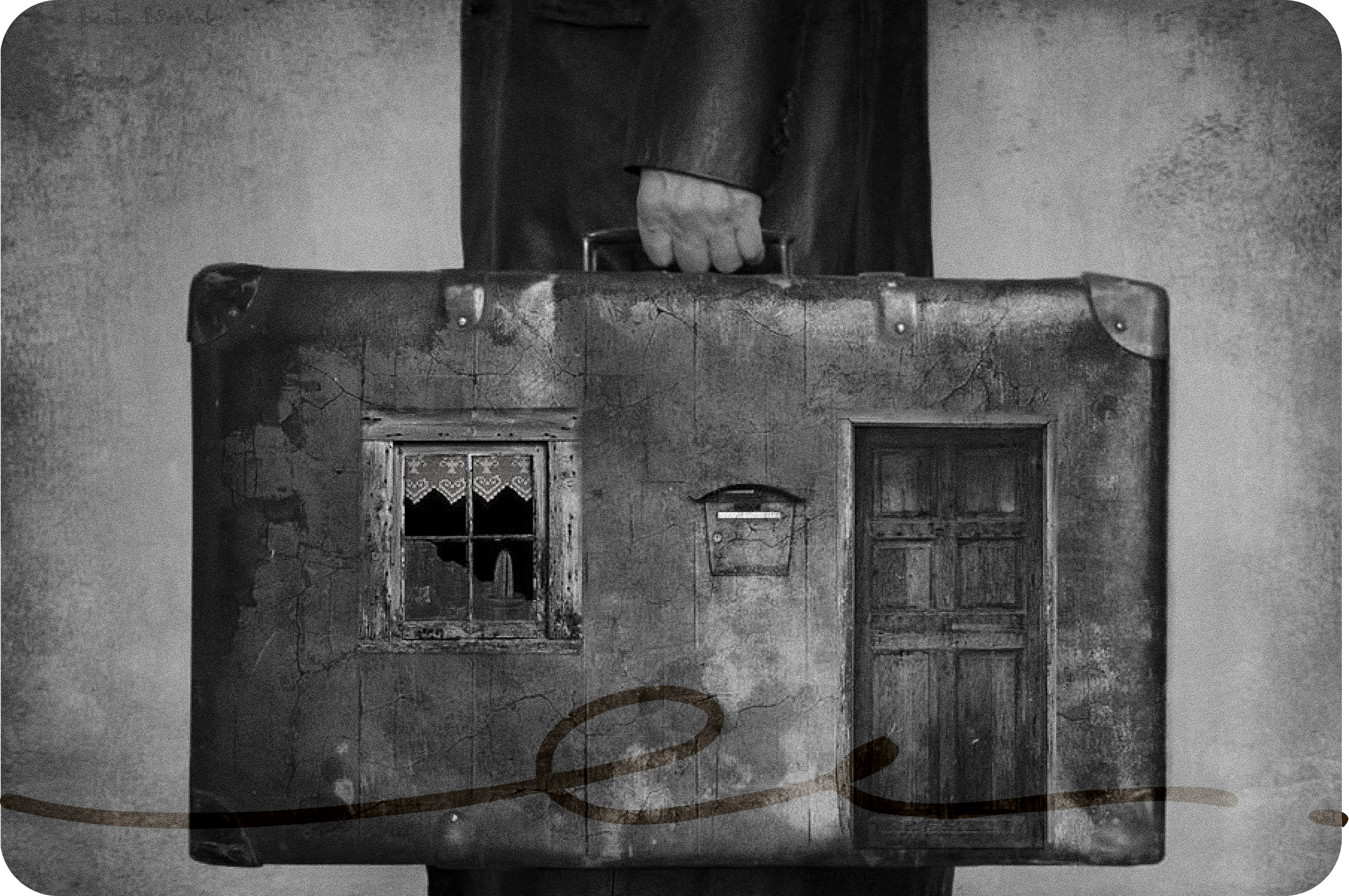
Femi groaned. His shoulders sagged as he let the heavy black suitcase fall to the tiled floor with a dull thud. His forehead was covered in sweat. He left a dusty streak above his eyebrow when he wiped it away. It was a small, human mark in the middle of all the chaos.
Seyi sat on the edge of the bare mattress with her knees pulled up to her chest. She wasn't looking at the suitcase; she was watching his hands and how pale his knuckles had gotten from holding the scale.
"Take off the heavy jeans," she said in a voice that was barely above a whisper. "You said your uncle in Toronto would buy you winter clothes no matter what."
Femi shook his head. He crouched beside the bag and unzipped it for the fourth time that night. The unmistakable smell of a Nigerian departure filled the room right away: the crisp new fabric, the sharp bite of camphor balls, and the earthy smell of dried catfish and locust beans, all wrapped up in newspaper and thick black nylon. His mother had said that the food would be his lifeline during the cold, foreign winter. He couldn’t bring himself to leave it behind.
Instead, he reached past the food and pulled out two pairs of thick denim, tossing them onto the growing pile of "abandoned items" in the corner. He hooked the scale to the handle, braced his legs, and lifted the bag again.
22.9 kg.
"Safe," Femi said, letting out a breath and dropping the bag. He then sat down next to it on the floor. He leaned the back of his head against the cool wall.
The silence that came after was hard to breathe through. A neighbor's generator made a low, steady sound outside, but inside the room, the air was completely still. For the last eight months, all they had talked about was this trip. They were obsessed with IELTS scores, proof of funds, biometric appointments, and exchange rates. They had planned his move to another country like a military mission.
But now that they had packed their bags and were leaving for the airport in less than 24 hours, there was nothing else to talk about. All that was left was the reality of the departure.
"Did you put the adapter in your bag?" Seyi asked. She wouldn't look him in the eye because she was staring at a loose thread on her jeans.
"Yes. Front pocket."
"And what about your transcripts?"
"In my hand luggage."
"Okay," she said. There was a tiny crack in her voice when she said the word.
Femi looked at her. Seyi had been the one refreshing the visa tracking portal every hour. She had been the one who organised his documents when he was too anxious to look at them. She had been trying to get him to go through a door for a year, but she knew she couldn't go through it with him yet.
He pushed himself off the floor, went to the edge of the bed, and pulled her to him. She didn't cry right away. Instead, she buried her face in his shirt and took a deep, shaky breath. Her fingers gripped the fabric of his sleeves like a lifeline.
They didn't talk about the collapsing economy that was forcing him to leave. They didn't talk about how unfair it was that a five-hour time difference and a 6,000-mile ocean had to put their future together on hold. They didn't talk about how scary it was to start over in a place where no one knew his name.
In the dim light of the room, they just sat there, holding each other and silently carrying the impossible weight of a 23-kilogram goodbye.