
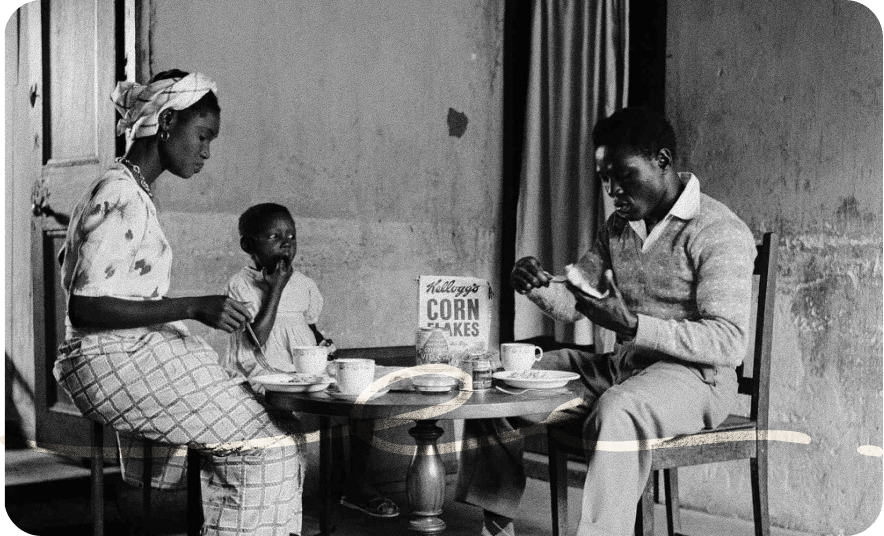
I think one of the quietest struggles in many African homes is how deeply parents and children can love each other while still barely understanding one another emotionally.
In many Nigerian families, love is often shown through sacrifice rather than conversation. Parents work endlessly, provide food, pay school fees, and do everything they can to give their children a better life. And because of that, many children grow up knowing they are loved.
But not always understood.
I think there is a difference between providing for a child and emotionally knowing them. Many young people grow up in homes where difficult feelings are rarely discussed openly. Fear, sadness, anxiety, insecurity, disappointment , these things are often swallowed quietly because vulnerability is not something many families were taught to handle gently.
Instead, people are told to “be strong.”
I noticed early that many parents come from generations where survival mattered more than emotional expression. They were raised in strict homes, taught to endure hardship silently, and expected to respect authority without questioning it. Because of that, many of them learned how to provide physically, but not always how to connect emotionally.
And honestly, I do not think most of them did it intentionally.
Sometimes parents love their children deeply but struggle to express softness because nobody ever showed that softness to them either.
So emotional distance begins to form quietly.
Children become careful about what they share. Parents assume silence means everything is fine. Important conversations get replaced with instructions, warnings, or academic expectations. Over time, many families become emotionally functional rather than emotionally close.
Everybody lives together, but not everybody feels seen.
I think this is why so many young people struggle to talk honestly with their parents about mental health, relationships, identity, failure, or personal pain. There is often fear of being misunderstood, judged, dismissed, or compared to others.
Sometimes children hide entire versions of themselves just to keep peace at home.
And sometimes parents mistake obedience for closeness.
One thing I find sad is that many parents and children actually want connection, but pride, generational differences, and emotional unfamiliarity stand in the way. Parents may believe they are protecting their children by being strict or emotionally distant. Meanwhile, children quietly long for reassurance, softness, and understanding.
Both sides care. But both sides struggle to communicate it in ways the other fully understands.
I think the pressure of survival in Nigeria also contributes to this distance. Many parents are overwhelmed by financial stress, insecurity, work, and responsibility. Emotional conversations begin to feel secondary when people are simply trying to survive. And because life feels hard already, emotions are sometimes treated like weaknesses instead of normal human experiences.
But emotional closeness matters too.
A child may forget certain things their parents bought for them, but they rarely forget how safe or unsafe they felt emotionally around them.
Still, I do not think these relationships are hopeless.
I think many young people are now trying to break patterns previous generations normalized. More people are learning how to communicate openly, apologize sincerely, express affection, and create emotionally safer relationships within families. Slowly, conversations that were once avoided are beginning to happen.
And maybe healing starts there.
Maybe healing begins when parents realize that respect does not disappear when emotions are expressed. And maybe it begins when children understand that many parents were trying their best with emotional tools they never fully had themselves.
Because sometimes emotional distance is not caused by lack of love.
Sometimes it is caused by generations of people loving each other without ever learning how to say it properly.