
My laptop was burning my thighs, the cooling fan spinning so loud it sounded like it was about to take off. For three hours, I had been staring at my screen, watching a digital model of a metal car part break over and over again. I had changed the thickness, adjusted the weight, and tried every trick the software allowed. Nothing worked. Every time I ran the test, the computer showed the metal snapping right down the middle.
Exhausted and frustrated, I closed the laptop. I left my hostel and took a motorcycle down to the oldest part of Ife, a place where the smooth roads turn to red dust and the city's noise fades into the rhythmic, heavy sound of a hammer hitting an anvil.
I was going to see Baba Ogunmola.
Baba was in his seventies, a traditional Yoruba blacksmith. His family had been shaping iron for generations, long before the first engineering textbook was ever brought to Nigeria. His workshop was a dark, soot-stained shed that smelt of charcoal, smoke, and raw sweat.
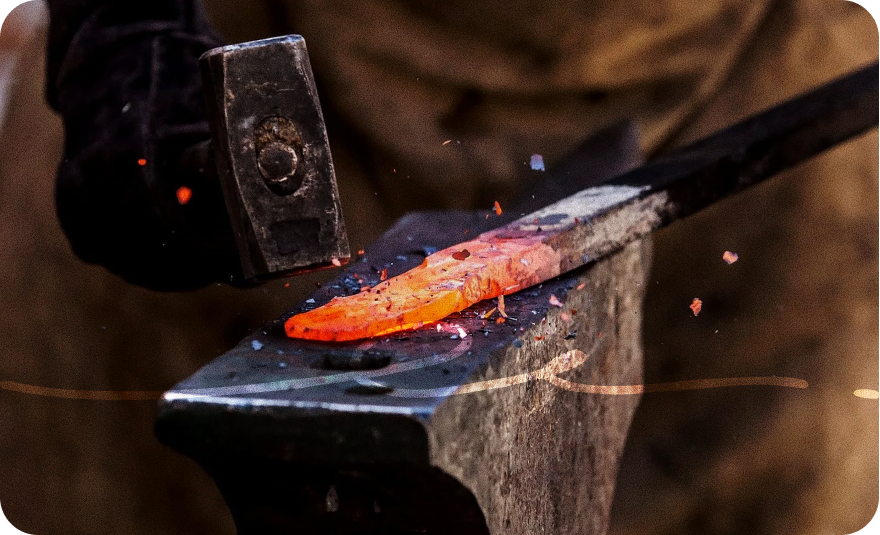
When I arrived, he was working a piece of glowing iron over the fire. He didn't use a digital thermometer to check the heat; he just watched the colour of the flame. He didn't use a ruler; he let his eyes and his calloused hands guide him.
"You are fighting with your machine again," he said without looking up, feeling my presence in the doorway. He struck the metal. Sparks rained down on the dirt floor.
I stepped into the suffocating heat of the shed. "Baba, the part I’m designing keeps breaking. The computer says it just can't handle the pressure."
He stopped hammering and used an iron tool to drop the glowing metal into a bucket of water. A loud hiss of steam filled the room. He pulled the metal out—now a perfectly hardened blade and looked at me.
"What does your computer know about the iron's memory?" he asked, wiping sweat from his forehead with the back of his wrist.
I frowned. "Iron doesn't have a memory, Baba. It’s just metal. It breaks when you put too much weight on it."
Baba Ogunmola chuckled, a deep, raspy sound. He walked over to a pile of scrap metal, picked up a rusted, bent rod, and tossed it to me. It was heavy and cold in my hands.
"The modern world teaches you how to force the metal to do what you want," Baba said, pointing a thick, scarred finger at the rod. "They teach you to calculate exactly how much pain it can take before it breaks. But our ancestors, the old blacksmiths, do not force the iron. We listen to it."
He walked back to his fire. "Iron comes from the earth. When you heat it, you are waking it up. When you strike it, you are teaching it a new shape. But if you strike it with anger, or if you force it to bend when it is cold and unyielding, the iron will remember that violence. And one day, when the pressure is too heavy, it will snap to punish you."
I stood there in the dusty shed, holding the rusted rod, letting his words sink in. In the university, we use big words like 'internal stress' to explain how metal breaks down from the inside over time.
But listening to Baba Ogunmola, I realised our ancestors understood this same truth centuries ago. They didn't have computers or fancy labs. They understood that everything in nature requires respect. They didn't call it science; they called it the memory of iron.
I had spent four years in a classroom learning to treat engineering like something we imported from the West. I had forgotten that I am the descendant of men who were mastering fire and iron while half the world was still in the dark.
I dropped the rusted rod and walked back out into the bright Osun sun. I didn't need to fight with my computer anymore. I just needed to redesign my work, this time making sure I wasn't forcing the metal to bend against its nature.