
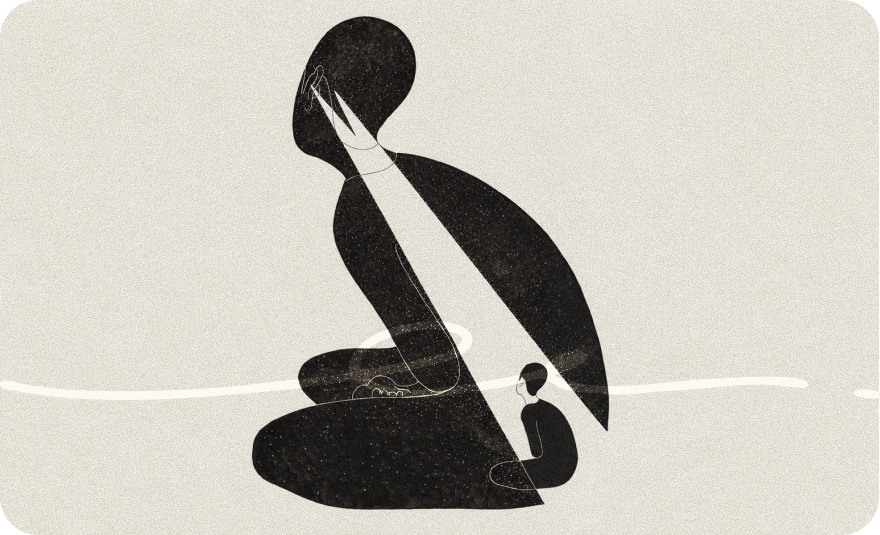
We often say things like “Have a conscience,” “Where is your conscience?” “He has a conscience,” “Vote your conscience,” and many more—expressions that reveal our profound trust in it.
The rate at which we believe in conscience as a taskforce that enforces good character and behavior sometimes makes me wonder: what exactly is conscience? Is it really as strong as we think it is? If yes, then why do some people act better than others while it stays quiet in them? Or perhaps it has a shorter lifespan in some of its hosts?
More often than not, trusting anyone’s conscience is like trading gold in the Forex market at the peak of an FOMC news release—it can be a dilly-dally adventure, grossly unworthy of trust.
Conscience is that internal moral compass that helps you distinguish right from wrong; it is the mental faculty that triggers a sense of peace when you act in alignment with your values, and a sense of guilt or unease when you don’t. Interestingly, conscience is only a taskforce that enforces the moral standards one has set for oneself over time. Its frame of reference is your own standards—standards you have developed previously. It does not necessarily make reference to any universal law of right and wrong.
Simply put, the conscience is like a law enforcement officer, enforcing the laws you have made over time. In the same way the law enforcement system of any country is at the mercy of the moral codes of its leadership, so is the conscience at the mercy of the moral codes of its host.
Sociologically, conscience is shaped by the culture, religion, and unspoken laws of the environment in which we were raised. By implication, this means that the conscience we often appeal to is itself a product of our belief systems and upbringing. It also means that a Muslim extremist killing innocent residents in Borno State may be doing so because he “has a conscience”—after all, the expression of conscience within his belief system may justify killing perceived infidels.
When a man’s wife gives birth to twins in a community where twin births are considered an abomination, his conscience may compel him to kill the babies—or at the very least, submit them to be killed by the villagers.
The fact that there is such a thing as an “informed conscience” is both an advantage and a disadvantage. Conscience is not static; it can be influenced by many things. People, for instance, use sex as a Valentine’s or birthday gift because their conscience has been shaped by a culture that equates love with giving—so much so that insisting on chastity begins to seem like wickedness to the other partner.
Our politicians have mastered the art of conscience-engineering. They withhold what rightfully belongs to us for so long, then release crumbs from it and make us feel indebted to them. This is why we continue to vote for wicked men who do not have our interests at heart. They care only for themselves, and any seeming good that comes from them arrives with a baggage of ulterior motives.
It may be a risky venture to tell a man who received his first car as a gift from a corrupt politician to “vote his conscience” when that same benefactor is on the ballot. His conscience cannot be trusted—it has long been engineered.
We are deeply politically tribalistic, nepotistic, and religiously biased because our consciences have been conditioned to favor narratives that do not serve our common good. Many times, the problem is not the absence of conscience, but the plague of living with a corrupted one.
We can continue wishing for a better society and desiring a better life, but the truth remains: all our efforts toward that end will forever be at the mercy of the sabotage of men whose consciences have been engineered—men who consciously or unconsciously oppose our common good.