
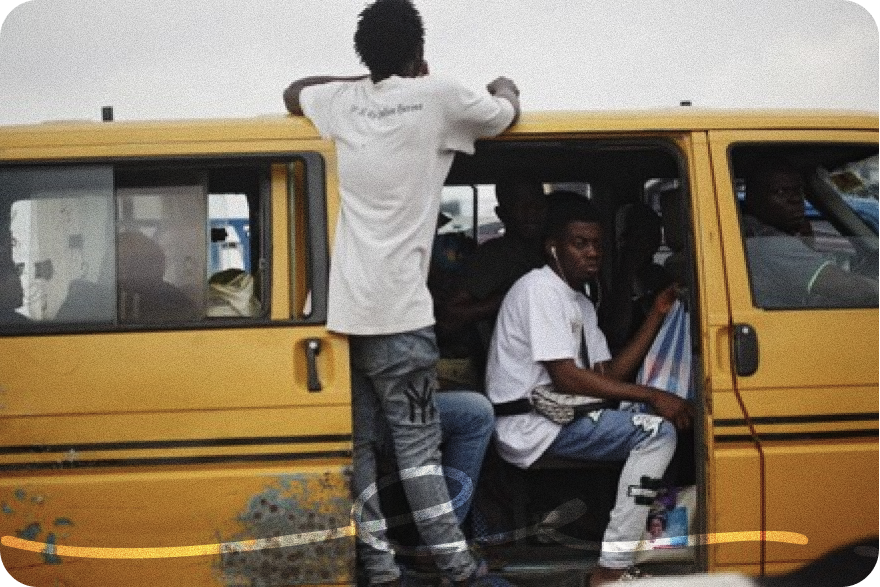
There is something about public transport that turns strangers into temporary companions. A bus ride is rarely just movement from one place to another; it becomes a waiting room for lives crossing briefly before continuing in different directions. We step in carrying backpacks, handbags, market bags, or purses, but the truth is that the heaviest things people carry are often invisible.
Anyone who has spent enough time inside a Nigerian bus understands this.
The buses groaning through traffic, conductors hanging halfway outside the doors shouting destinations with a rehearsed urgency, passengers squeezed shoulder to shoulder beneath heat and impatience. Public transport is where lives collide. For a few minutes or a few hours, strangers become witnesses to one another’s existence.
I remember one bus ride in particular in Makurdi, Benue State. It was one of those afternoons where the heat sat stubbornly on the skin. Traffic barely moved due to a road construction ongoing for over 6 months now. The driver kept tapping his steering wheel with the frustration of a man who had already accepted defeat. The conductor wiped sweat from his forehead with a faded towel and occasionally leaned out to yell at drivers who cut into our lane. Inside the bus, everyone looked exhausted in the particular way Nigerians often do, not just physically tired, but tired of everything words alone cannot name.
As usual, conversation began the way it often does among strangers in Nigeria, with complaints.
Politics entered first. Then fuel prices. Corruption. Electricity. The familiar disappointments that unite people who have never met before. Soon everyone had something to say. In Nigeria, hardship often makes experts of us all.
A woman carrying a plastic basin filled with smoked fish shook her head and cursed the state of the country. She spoke about rising prices and insecurity before her voice changed. Her brother, she said, had been a soldier. He died fighting insurgents in the North-east. At first, it sounded like another political complaint. But grief has a way of revealing itself if you listen long enough. Somewhere beneath her anger was a sister still mourning.
Across from her sat a student clutching a green project file tightly against his chest. He looked no older than twenty-five. He laughed occasionally at the conversation but mostly stared out through the window. Eventually he spoke too. Final-year project stress, he said. Supervisors delaying approvals. Endless corrections. Stories of lecturers who demanded gifts before approving your project. Everyone laughed knowingly because almost everyone had either lived that story or knew someone who had.
The driver joined in too. He talked about roads he no longer liked driving through, places where fear had become part of the route itself. He spoke about insecurity with the detached voice people use when discussing things they have become too familiar with. But beneath his words was resignation, the kind that comes from adapting to realities one should never have to adapt to.
One after another, stories spilled into the air.
From the outside, it looked ordinary. Just people talking to pass time. Complaining, laughing, arguing, surviving another commute.
But beneath every complaint sat grief.
Beneath every opinion sat a private wound.
And I remember sitting there realizing that perhaps this is what being human means, becoming skilled at carrying pain while still showing up for ordinary life.
Because human beings are experts at disguising suffering as routine.
We go to work with heartbreak tucked neatly beneath pressed clothes. We attend meetings while carrying anxieties we do not know how to name. We laugh loudly at jokes while mourning things we have not yet found a name for. When people ask people, 'How are you?', we answer 'I'm fine' because explaining everything would take too long.
Maybe that is why kindness matters more than we realize. Because we encounter people at intersections of stories we know nothing about.
The woman who refuses to smile may be fighting loneliness. The colleague who suddenly becomes withdrawn may be carrying grief home every night. The stranger who snaps in anger may have spent years surviving disappointments invisible to everyone else. The friend who stops replying messages may not be distant, they may simply be tired in ways they do not know how to explain.
Yet we often judge people using the smallest fragments of who they are, a moment, an expression, a mistake. We build entire conclusions around brief encounters, forgetting that lives are always larger than the versions we meet. We forget that no one arrives empty-handed. Everyone is carrying something.
Perhaps everyone is trying, in their own way, to survive what life has handed them.
That day in the bus taught me something I continue to hold onto, every person we meet has a story tucked somewhere inside them. Stories hidden beneath laughter, impatience, silence, or anger.
Stories waiting, not always to be solved, but simply to be understood.
Maybe the world would become softer if we remembered this. Maybe we would speak more gently, pause before judging, and extend grace more freely. Because every person we meet is carrying stories far greater than what they allow the world to see.