
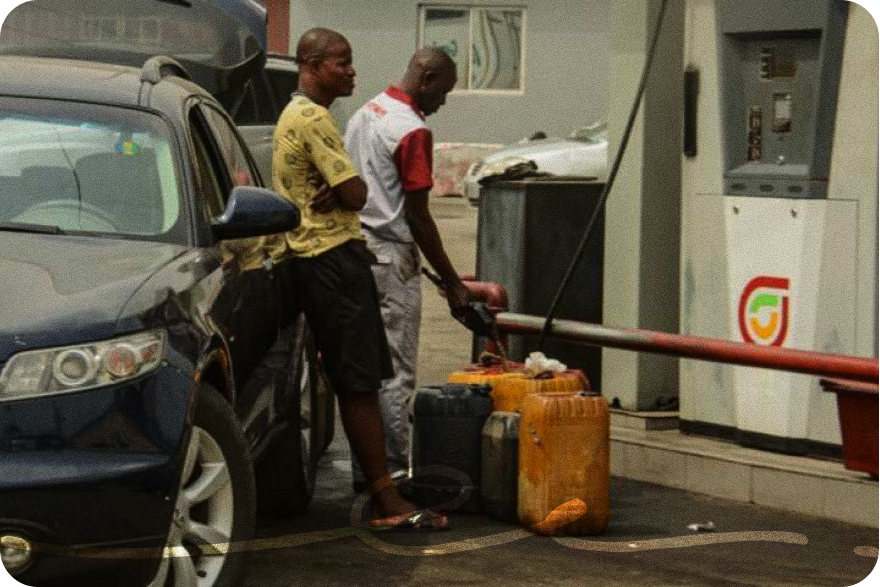
On May 29, 2023, barely minutes into his presidency, Bola Ahmed Tinubu uttered four words that would reshape daily life for over 200 million Nigerians: “Fuel subsidy is gone.” It was a declaration as bold as it was abrupt, no transition period, no social cushion ready on the ground. Just the end of a policy that had defined the relationship between the Nigerian government and its citizens for five decades.
Three years on, the debate over that decision remains fiercely alive and the numbers tell a story that defies easy conclusions. An overwhelming 85% of Nigerians disapprove of the subsidy removal, including 52% who strongly disapprove, with barely 12% saying they approve. Yet economists, international lenders, and even some Nigerian scholars largely agree the subsidy had to go. Fuel subsidy figures had jumped from ₦316.7 billion in 2015 to over ₦2.565 trillion in 2023 a trajectory no government could sustain indefinitely. That tension, between what the data demands and what the people endure, is at the heart of the story Nigeria is still trying to tell itself.
The Case for Removal
Nigeria’s fuel subsidy was, by any economic measure, unsustainable. By 2022, it had cost the country $10 billion in a single year money drained from a treasury that could not afford to maintain roads, schools, or hospitals. Defenders of the subsidy often framed it as a lifeline for the poor, but the reality was more complicated. Studies have shown that fuel subsidies disproportionately benefit higher income individuals who consume more fuel, rather than effectively reaching the poor. In practice, a significant share of the benefit flowed to fuel smugglers, oil marketers, and middle-class car owners not the roadside trader or the subsistence farmer.
There was also the problem of fiscal dependence. For years, successive administrations had borrowed to fund the subsidy, compounding Nigeria’s debt burden while neglecting infrastructure and human capital. Nigeria had committed enormous resources to an unsustainable subsidy regime that benefited only a few while depriving critical sectors of much-needed investment. From this perspective, removal was not a choice it was an inevitability. The question was only when and how.
The Human Cost
But policy arguments made in boardrooms look very different at the bus stop. The immediate effect of the removal was devastating for ordinary Nigerians. Fuel prices surged from ₦185 per litre in 2023 to ₦1,025 per litre in 2024, while the naira weakened from 460 to the dollar to 1,700. Transport costs, food prices, and electricity tariffs all spiked in quick succession.
Headline inflation accelerated from 18% in mid 2023 to over 24% by July, reaching an 18 year high, with food inflation climbing sharply within weeks of the change. By 2024, things had deteriorated further. Nigeria’s headline inflation rose steadily, reaching 34.19% by June 2024 the highest level recorded in nearly two decades, driven by rising fuel and food prices, currency depreciation, and a deepening cost of living crisis.
World Bank projections estimated that by the end of 2024, about four in ten Nigerians would be living below the international poverty line. For a country where most people already live close to the edge, that figure represents not a statistic but a catastrophe meaning more school dropouts, food insecurity, abandoned small businesses.
The Question of Management
Critics of the Tinubu administration do not necessarily argue that the subsidy should have remained forever. Many concede the economic logic of removal. What they contest is the manner of its execution — abrupt, poorly sequenced, and with relief measures that arrived too late and reached too few. The government announced several relief measures including a ₦500 billion economic stimulus targeting farmers, CNG bus imports for cheaper public transit, and cash transfers for the poor yet many Nigerians complained these were inadequate.
The fuel subsidy removal increased inflation, poverty, and hunger, and helped build the mass social unrest behind the 2024 #EndBadGovernanceinNigeria protests. Public anger was not simply about fuel prices. It was the accumulated frustration of a population that had been asked, repeatedly, to sacrifice and had seen little evidence that the savings were being invested back into their lives.
Three Years On
As Tinubu marked his third anniversary in office, his tone was unapologetic. He insisted the decision had saved Nigeria from bankruptcy and that the economy was now recovering. There are some signs to support that claim citing the fact that government revenues have improved, and state governments report greater fiscal space. But nearly half of all Nigerians lived below the national poverty line in 2024, and about 75% of Nigerians, when surveyed, said the fuel subsidy removal was not a good thing.
So here is the question worth sitting with: if a reform is economically correct but the majority of those it was meant to help say it has made their lives worse who exactly, did it reform things for? Nigeria removed the subsidy. But it has yet to answer the harder question of what it owes the people who paid the price.