
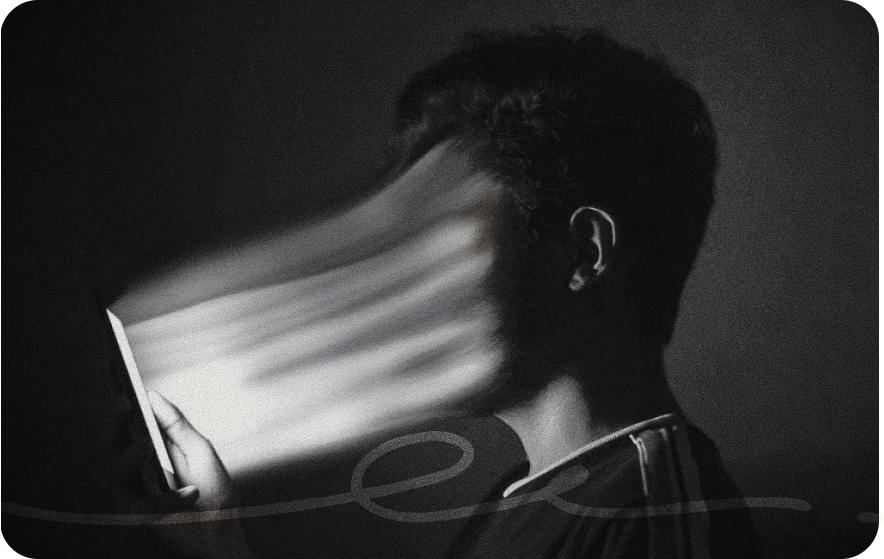
There is a strange emptiness that creeps in when our data runs out.
Young adults today are so used to constantly being on their phones that the moment the connection drops, it feels like life itself has been unplugged. I know this because I have felt it.
The restlessness.
The aimless pacing.
That quiet confusion, like something essential is missing.
It raises an uncomfortable question
What exactly are we addicted to?
Because there was a time not too long ago—when we lived just fine without this constant digital pull. Before the endless scroll. Before the need to always be “connected.”
So beyond social media… who are we?
Somewhere along the way, we began to forget ourselves. We started picking up identities that were never really ours trends, opinions, and curated realities designed for consumption, not truth.
Our real life has become quiet.
But our online lives? Loud. Chaotic. Constant.
Walk into any gathering today and you’ll see it. People sitting together, yet absent. Eyes locked on screens, attention given to distant, invisible personalities, while the living, breathing human right in front of them fades into the background.
We are there—but not really there.
We have normalized overconsumption in ways we barely question.
Podcasts while walking.
Reels in the bathroom.
Music while cooking.
Netflix while eating.
There is always something filling the silence.
And maybe that’s the problem.
Because silence forces you to meet yourself. And for many of us, that has become uncomfortable. So we drown it out. Constantly.
Then we wonder why we feel overstimulated. Mentally drained. Exhausted without doing anything truly meaningful.
The truth is simple
The world we live in is built to monetize attention.
And one of the greatest distractions of this is the screen.
Everything we see is intentional. The endless scrolling. The notifications. The carefully curated content. These systems are not random,they are designed and built around our behaviors and habits these are our weaknesses.
We are not just using these platforms.
In many ways, they are using us.
Even our sense of urgency has changed. A delayed reply to a message or email is now often seen as negligence. Disinterest. Missed opportunity.
So we stay online.
Not always because we want to but because we feel we have to.
There is a subtle fear beneath it all
That if we disconnect, even briefly, we might lose something important. A client. A deal. A chance.
It creates a quiet dependency.
A feeling that our survival is somehow tied to the internet.
And in the process, we are slowly underusing the one thing that makes us human—our minds.
We outsource memory. Thinking. Even the simplest tasks.
Before all of this, reading used to be an escape. A way to slow down, to think deeply, to understand and communicate better.
Now, even in face-to-face conversations, something feels incomplete.
Like we’ve forgotten how to fully communicate in person.
Social media, for all its advantages, has also given us something dangerous,a distorted sense of self.
Behind screens, people can be bold, expressive, and confident. But in real life, many struggle to hold meaningful conversations.
So yes, it can help those with low self-esteem find a voice.
But is that voice real?
Or is it just another version of ourselves—edited, filtered, and shaped for approval?
There is, without doubt, opportunity in this digital world. People are building careers, earning money, and creating influence without ever showing their faces.
But eventually, something always catches up.
Because behind every account, every brand, every identity,there is a real person.
And at some point, the world asks to see them.
And when that moment comes, everything returns to one thing.
Who you really are when the screen goes off.