
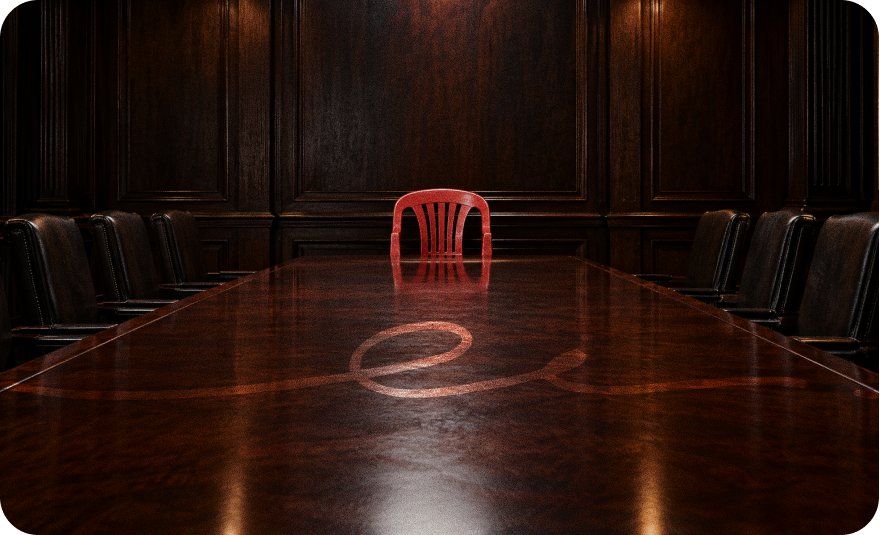
There is a particular kind of power that belongs only to the outside. It is ungoverned, unbudgeted, answerable to no one but the truth as you understand it. You wake up, you open your phone, you say what needs to be said, and sometimes, if the words land right, something moves, not policy or institutions, but people. And for a long time, you tell yourself that people are enough.
I built something from the outside. Not an office, not a title, but a presence. A consistent, committed digital voice that showed up every morning in the conversation about my state, my governor, my people's future. I was not asked to do this. No one commissioned the threads, the counter-narratives, the amplification of what was working and the honest interrogation of what wasn't. I did it because I believed in the direction we were headed, and because I understood something that formal structures often miss: that in the age of social media, perception does not follow reality, reality follows perception. And someone had to shape it.
For months, that someone was me.
I watched misinformation spread and corrected it. I watched cynicism harden into dogma and offered evidence against it. I watched genuine work get drowned in noise and chose, again and again, to amplify the signal. I did this without backing, without protection, with nothing but conviction and a stubborn belief that the work mattered.
And then the door opened.
I want to be honest about what I felt when it did. There was joy, of course there was joy. Recognition is not a small thing, especially when you have been giving freely for so long. But underneath the joy was something more complicated, a question I didn't yet have language for. I would find it later, in the quiet after the congratulations: if I step inside, do I get to bring myself with me?
The outside has a particular relationship with truth. It is ruthless and clarifying. When you are not carrying institutional weight, when no appointment letter has your name on it, you have only one currency: credibility. You protect it fiercely. You say the difficult thing because the difficult thing is the only thing worth saying. Your audience follows you not because you are powerful but because you are honest, and honesty, in the digital space, is the rarest form of authority.
The inside operates by a different, richer logic.
Inside, you are no longer observing the machine from a distance. You are inside it, and the view is entirely different. Problems you once described in 280 characters reveal themselves to be layered, contested, deeply human. You see the efforts being made, the constraints being navigated, the quiet wins that never make it to a timeline. You see the full picture, and the full picture does not make you soft. It makes you precise. When your words become more measured, it is not because you have surrendered your convictions. It is because you now understand what you are actually dealing with, and that understanding demands more careful language. The measured statement is not silence. It is accuracy earned from proximity.
Being on the inside also means something the outside cannot offer: the ability to act, to open a door for someone who deserves to walk through it, to push a reform from within the room where decisions are made, to be the voice that says, the people outside are saying this, and they are right. The outside can apply pressure. The inside can apply it to exactly the right point.
Here is what I have learned in the space between.
The outside and the inside need each other in ways neither wants to fully admit. Movements without access become noise: urgent, righteous, and ultimately exhausted. Institutions without pressure become stagnant, comfortable, self-referential, and slowly disconnected from the people they exist to serve. The advocate who steps inside carries something precious: the memory of what it felt like to be on the other side of the door. That memory is not a liability. It is the most important thing you own.
The question is whether you protect it.
I think about the people still on the outside. The ones doing what I did, building without backing, believing without assurance. They are the early warning system, the conscience, and the whole point. If stepping inside means I can no longer hear them, then I have not expanded my reach, I have only narrowed it.
So where do we go from here?
Not forward in a straight line, and not backward into nostalgia for a purity that was always partly myth, but into the difficult middle, where the work is messier and the answers less clean. We take the instincts forged on the outside, the urgency, the accountability, the refusal to perform progress that doesn't exist, and we bring them into rooms where they are uncomfortable and necessary and, sometimes, unwelcome.
We go where the tension is, because the tension is not the problem. The tension is the whole point.
A government that cannot tolerate a critical voice inside it does not want reform, it wants decoration. An advocate who loses their edge the moment they gain access was never really an advocate, they were auditioning. The version of this story worth writing is the one where neither of those things is true, where access becomes a lever and not a leash, where the insider still remembers what it meant to stand outside and knock.
I am still learning what that looks like in practice, and I will not pretend otherwise. But I know this: the question is not whether to go inside or stay outside. The question is what you carry with you when you cross, and whether you are brave enough to keep carrying it after the door has closed behind you.
That is the work, and it is just beginning.