
“I noticed one thing about you from the first class. You are too sure of yourself, and that is a disease. You kill yourself before you start,” said Prof I.A during my meeting with him.
We were grouped in class and distributed across various laboratories under different researchers. The aim was for us to become conversant with advanced biochemical techniques, while also gaining a glimpse of what it truly means to be a researcher and a scientist.
At the end of this exercise, we were expected to present a manuscript. It could be a research paper, a case study, or a review paper. “Work with your supervisors,” Prof I.A had said.
My group did not do much in the laboratory, so our supervisor advised that a narrative review manuscript would be an excellent academic exercise. An exercise, because we as undergraduates are not yet equipped enough to produce an outstanding scientific article.
To submit a review paper to the Nigerian Journal of Biochemistry and Molecular Biology, one needs an invitation or prior approval from the editor-in-chief.
Immediately I found out, I thought to myself, we will not get an invite.
I said, “Let’s find another journal to send our work to.”
And there it is- My problem.
I am too sure.
I am certain that I am not good enough, and now I am projecting that belief onto other members of my group.
..................
Seventy-four…
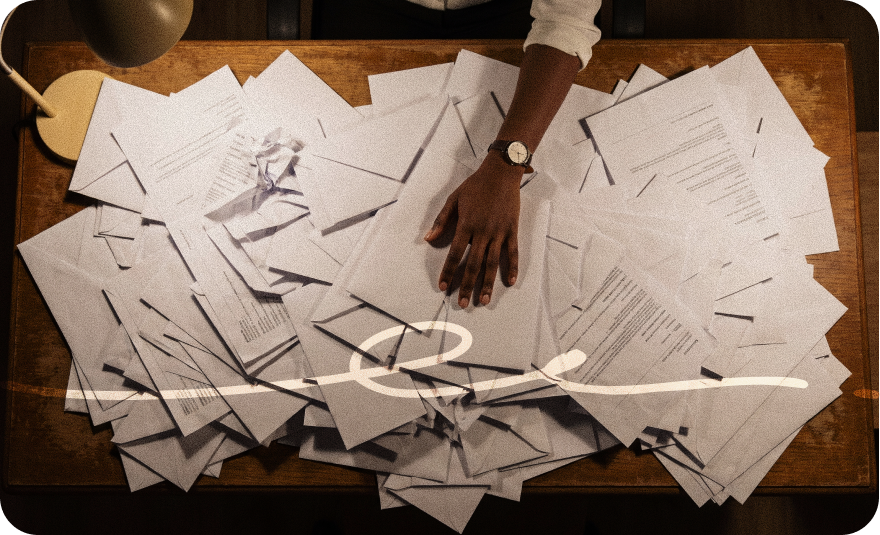
That is the number of applications I have sent out since my second year as an undergraduate.
Applications for internships, externships, scholarships, mentorships. Different opportunities, different hopes.
The outcome? Always the same.
Rejection.
“Unfortunately…”
“This does not mean you are not good enough. The competition was tight…”
That is all I get.
All the time.
So would you blame me if I think like this?
If I am certain that I am not good enough?
If I am certain I will fail?
Seventy-four times, I put in the work.
Seventy-four times, I had sleepless nights.
Seventy-three times, I stood up and tried again.
At a point, rejection stopped feeling like an interruption and started feeling like a pattern.
Now, I am so used to failure that I no longer see it as something negative. It has become familiar. Always expected.
I am told every day, reminded by my peers and immediate acquaintances, that I am smart, that I am brilliant.
But if that is true, why is it so hard for me to succeed?
Why is it so hard for my work, my good grades, my applications to be approved, applauded, rewarded?
Why am I unable to get one, just one validation of these claims?
I ask myself every day if they truly know what they are saying.
I ask myself every day: who are you?
Because I was not always like this.
I was not always this doubtful, this certain of my own failure.
My experiences shaped me.
Each rejection, each “unfortunately,” each silence in place of opportunity, slowly built this version of me.
So would you blame me for adapting?
Would you blame me for becoming familiar with my reality?
For learning to expect less, just to protect myself from disappointment?
So yes, Prof I.A, you are right.
I am too sure.
I am certain I will fail.
It has slowly become who I am.
And yet, somehow, I am still trying.