
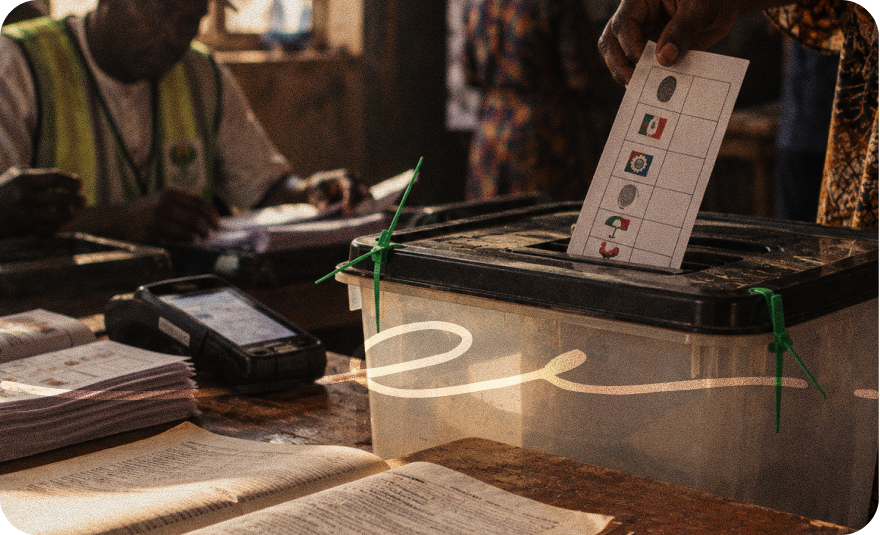
On the 17th of February, 2026, the Nigerian National Assembly passed the Bill for an Act to repeal the Electoral Act No.13, 2022, and enact the Electoral Act, 2026, to regulate the conduct of Federal, State and Area council elections in the Federal Capital Territory, Abuja and for related Matters.
As the 2027 elections draws near, it is important to understand the new law that will guide the conduct of every participant, stakeholder in the elections and, subsequently, the swarm of election petitions that will surely come after.
The new reforms in the Electoral Act have drawn a lot of criticisms. I have made a list of a few of the reforms, contributing my quota to the enlightenment of the general populace ahead of the 2027 elections. So, here we go!
Timeline For Election Funding
Section 3(1) states how the Independent National Electoral Commission (INEC) will be funded. There will be a creation of a fund for INEC, where the government will disburse the finances for INEC to carry out its functions and any other financial input to INEC for the purpose of carrying out its functions. Section 3(4) then provides that the funds needed for the conduct of any general election shall be released not later than 6 months before the conduct of the next general election. This means that if any general election (federal, state, or local) is to be held, INEC must receive the funds for that election 6 months before the conduct of that election. The repealed Electoral Act had 12 months. This reduced timeline for release of funds for elections can affect the execution of elections, especially on logistics, procurements, distribution of election materials, remuneration of electoral officers, and transportation.
Means Of Identification For Voter Registration
Section 10(1) of the Electoral Act 2026 lists a Nigerian birth certificate, Nigerian passport, and National Identification Number (NIN) as required means of identification for voter registration. The former Act had these, with National ID cards and driver’s licenses. This means INEC will only accept a Nigerian birth certificate, Nigerian Passport and NIN slip or card as a means of identification before you can do your voter registration.
Downloadable Voters’ Cards
Section 15 of the Act empowers INEC to make the voter's card available in an electronic copy, which will be available after payment of a fee as required by INEC. Section 18(1) says that when a person loses their voter's card or it is destroyed or defaced, the person can apply to INEC for a replacement or download and print a copy of their voter's card.
Timeline For Submission Of Candidates List
Section 29(1) of the Act requires political parties to submit their list of candidates for election within 120 days before any election. This is a change from the previous Act, which had 180 days. This reduced timeline will ensure that political parties settle issues faster and conduct primaries faster and give little time for unnecessary politicking within political parties. Political parties will settle internal issues quickly and decide their party candidate since they now have less time before the election for campaigns and rallies.
Publication Of Candidates List
Section 32(1) states that INEC must publish the names of the candidates submitted by political parties within 60 days before the election. The previous Act had 150 days. The list will include the names and addresses of the candidates. What this means is that Nigerians will only have 60 days to identify who is running for any office from any party. This gives little time for the public to properly scrutinize a candidate before the election.
Campaign Spending Limit
Section 92(2-7) has now increased the campaign spending limit for political parties for different elective positions. The Act increased the limit for Presidency from N5bn to N10bn; Governorship from N1bn to N3bn; Senator from N100m to N500m; House of Representatives from N70m to 250m; State House of Assembly from N30m to N100m; Area/Local Council Chairmanship from N30m to N100m; Ward Councilor from N5m to N10m; and personal donation limit from N50m to N500m. There are a number of criticisms of this increase. Firstly, the electoral process in Nigeria is too capital intensive; politicians spend too much on winning elections, absolutely too much. Now we have an Electoral Act enlarging the limit of what they can spend. Secondly, this is a law that I personally don’t expect to be enforced because campaign finance by political parties is almost impossible to track. One can only know whatever is disclosed by the political parties.
The Act contains provisions penalizing defaulters, like section 92(10), which provides that anyone who defaults on the personal donation limit will pay 5 times the excess of the default to INEC as a fine. For example, if you donate 800m to a candidate, which is 300m above the limit, you will pay a 1.5bn fine to INEC. Section 92(9) says any candidate who exceeds the campaign spending limit will pay a 1% fine of the limit or 12 months' imprisonment or both. If an accountant falsifies or modifies a document about campaign expenditure for any party or candidate. They are liable to a 5m fine or 3 yrs. imprisonment or both. Section 93(2) cloaks INEC with the authority of determining the election expenses of a political party. Section 93(3) says that all political parties must submit an account statement of their expenditure within 6 months after elections, and such an account statement must be signed by the auditors of the political party, the chairman of the party, and a sworn affidavit signed by a person swearing to the correctness of the account statement. Section 93(4) says that any political party that defaults on section 93(3) will get a 10m fine where an offence is committed, and for a political party that fails to submit within the 6 months stipulated, a 1m fine per day for every day of default. That is, every day the party fails to submit after the 6-month deadline. These provisions for enforcement are wonderful, but with what obtains realistically in Nigeria’s political landscape, I struggle to see an honest, all-encompassing enforcement of these provisions. At most, it will be used as a weapon to witch-hunt political opponents and parties.
Mandatory Electronic Transmission
Section 60(3) of the Act establishes that electronic transmission of results must be done recently to the IREV portal by the presiding election officer in a polling unit. But before such transmission, the form EC8A (Election result sheet) must be signed by the presiding officer and candidates or their agents at the polling unit. So, where there is a failure of electronic transmission, the form EC8A will be the primary source of the result of the election at that polling unit. The problem here is that this provision is merely a fluke. As long as the presiding officer can show that electronic transmission was not possible, then form EC8A determines the results. The presiding officer essentially has the power to decide whether the result in your polling unit will be sent directly to the IREV portal from the BVAS machine or will be decided by a handwritten paper. The Act says nothing about what is objectively admissible as fault of electronic transmission. It’s just up to the presiding officer to decide whether or not there has been failure of electronic transmission. Any sane Nigerian can easily see that this provision does nothing to secure votes cast in a polling unit.
Political Party Selection Process
Section 84(1) of the Act says that political parties can nominate candidates by conducting primary elections. Section 84(2) establishes that nomination of candidates by political parties can only be by consensus or by direct primaries. This means that either the party agrees on one candidate or every individual member of the party votes for the party’s candidate. This provision effectively ends indirect primaries and party delegates. The indirect primaries system enabled candidates to buy party delegates with huge sums of money in their favour, as we saw in the last election.
Electoral reforms are meant to revolutionize the conduct of elections for the better. That is, make it easier to register and get a voter ID, reduce election corruption, take away the power from political parties, and put electoral power in the hands of the people that it should be. However, if electoral laws still contain loopholes that can be exploited by political parties, then it is not a solution; we have only given ourselves a new kind of problem.
Reference
Federal Republic of Nigeria. (2026). Electoral Act, 2026. Policy and Legal Advocacy Centre (PLAC). https://placng.org/i/wp-content/uploads/2026/03/ElectoralAct2026.pdf