
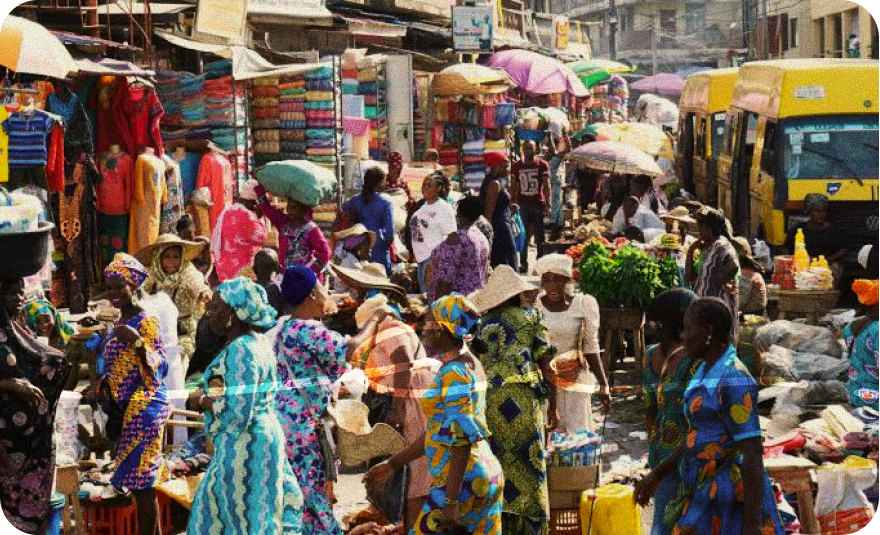
I stood in front of the rice seller for longer than I needed to.
He must have thought I was comparing brands, but I wasn't. I was doing arithmetic in my head.
"How much?" I asked, even though I already knew the answer.
"Sixty-two thousand," he replied without looking up.
I smiled politely, thanked him, and walked away.
A few years earlier, I had bought the same bag of rice for about ₦18,000. Back then, I would have complained about the price, paid for it, and gone home. On that morning, I couldn't even pretend I could afford it.
Instead, I continued walking through the market carrying an empty shopping bag.
It wasn't supposed to be like this.
I still remember the excitement of getting my first job. Receiving that employment letter felt like receiving a ticket into adulthood. I imagined all the things I would finally be able to do. I would pay my own bills, rent my own apartment, help my family when they needed me, and save enough to get married and build a family of my own.
When I eventually moved out of my parents' house, I felt proud every time I unlocked the door to my apartment. It wasn't luxurious, but it represented something I had worked hard to achieve. For the first time, I was responsible for myself. Paying rent, buying groceries, and settling my monthly bills weren't burdens. They were reminders that I had become independent.
For a while, life felt exactly as I had imagined it.
Then the prices began to rise.
At first, I hardly noticed. Bread became a little more expensive. Transport fares increased by a small amount. I adjusted my budget and carried on, believing things would eventually return to normal.
They never did.
Each month, something else became more expensive. Food. Rent. Fuel. Electricity. Transportation. School fees. It felt as though every corner of life demanded more money than the month before.
Standing in that market, I realised the problem wasn't that rice had become expensive.
The problem was that my salary had not changed.
The same income that once covered my rent, transportation, groceries, and a little savings now struggled to survive the month. Every payday felt shorter than the last.
I left the rice stall and continued shopping, but it no longer felt like shopping. It felt like negotiation.
I picked up a bottle of cooking oil, looked at the price, and put it back.
I walked over to the tomatoes, bought fewer than I normally would, then reduced them again.
Every decision became a calculation.
Not, "Do I need this?"
But, "Can I survive without it?"
The journey home reminded me that the market wasn't the only place where prices had changed.
At the bus stop, the driver announced, “Na ₦200 o!”—double the usual fare for my commute. I was silent, calculating how to make it back home. When I bargained for ₦150, he refused. Since I couldn’t miss work, I paid the ₦200.
Then, my landlord called a meeting. We wondered why, as there had been no issues. He explained the hardships but said he had to increase the rent slightly. Though we pleaded, it was non-negotiable. The increase was ₦50,000, which he acknowledged was less than what other landlords demanded. Still, it was more than I could comfortably afford. My income hadn’t increased, yet I was contributing to someone else’s rising income.
At work, we were called to a general meeting. It was unusually brief. We received letters explaining the company’s financial struggles and announcing salary reductions to prevent shutdown.
By the time I reached home, my shopping bag was lighter than it should have been.
I unpacked the few things I had managed to buy and placed them on the kitchen counter. The empty spaces were impossible to ignore.
That afternoon, I sat quietly wondering how people with larger families were coping. If feeding myself had become this difficult despite having a job, what was life like for those earning less or searching for work?
What troubles me most is not that prices have increased.
Economies rise and fall. Markets change.
That morning in the market changed the way I think about employment.
When I got my first job, I believed earning a salary meant I had escaped financial uncertainty. I thought hard work alone would be enough to build the life I imagined.
Standing in front of a bag of rice I could no longer afford, I realised that having a job and being able to live comfortably are no longer the same thing.
I left the market with fewer groceries than I planned to buy.
I also left with the uncomfortable understanding that the cost-of-living crisis isn't measured only by rising prices.
Sometimes, it's measured by the things you quietly put back on the shelf.