
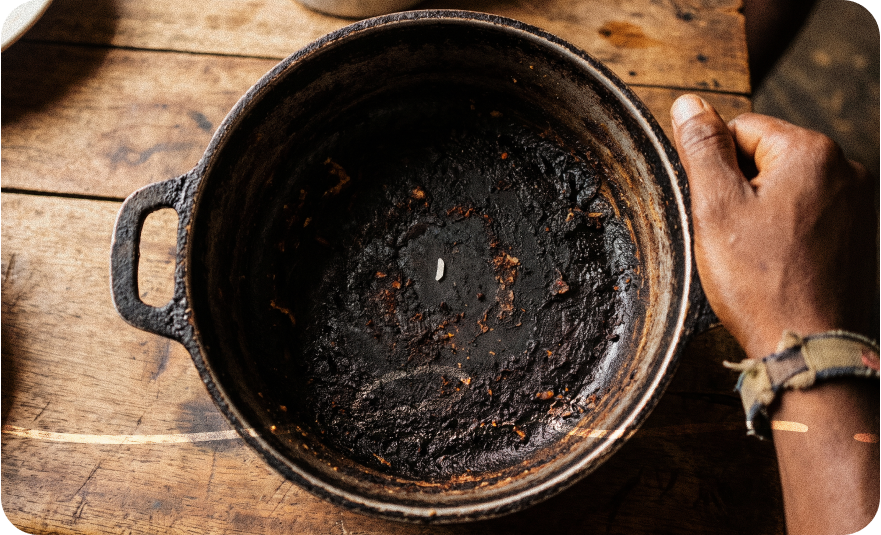
The first meal I cooked for myself was almost inedible.
The rice was half-burnt at the bottom of the pot and somehow still chalky on top. I had added too much water, then too little, lifting the lid every few minutes to stare anxiously into the steam because I had no idea what I was doing. When I finally tasted the crunchy, smoky grains, I laughed alone in the room—partly because it was terrible, and partly because I realised there was no one else to blame.
I had just arrived at the university, hundreds of kilometres away from home. For the first time, there was no mother, sister, or female relative to set a plate down before I returned from a long day of classes. If I wanted to eat, I had to learn.
The problem was that no one had ever expected me to.
Growing up, the geography of our compound was divided by unspoken rules. The kitchen belonged to the girls. As boys, we were directed toward the outer edges—farming, clearing land, and doing the heavy labour considered suitable for men. Our sisters stayed closer to the hearth, learning the precise chemistry of woodsmoke, washing, and looking after the younger children. It was never presented as an injustice; it was simply the rhythm of the house. I never questioned why my hands were always dry while theirs smelled of onions and palm oil. If I ever wandered near the cooking pots out of curiosity, an aunt would quickly find an outdoor errand for me to run. Without a word ever being spoken directly to me, I learned that hunger was my only responsibility in the kitchen.
University upended that rhythm. My first month in the student lodge was a sequence of small, humiliating disasters. Rice regularly turned into a sticky porridge. Beans sat on my small kerosene stove for hours, stubborn and unyielding, refusing to soften. One evening, I burnt a pot of yams so severely that the thick, black crust took longer to scrub away than the actual preparation had taken. Many nights, defeated by the smoke and frustration, I abandoned the stove entirely and spent my limited pocket money on roadside akara and bread.
One afternoon, after ruining yet another pot of rice, I stood over the sink and dialled home.
My mother’s laughter came through the static of the phone before she offered any practical advice.
"Reduce the heat to a whisper," she told me, her voice calm against my panic. "Leave the lid alone. You are suffocating the food by looking at it every two minutes."
It sounded impossibly simple. Hanging up, I wondered how a process so foundational to staying alive had remained entirely invisible to me for eighteen years.
Slowly, the errors became less frequent. I stopped over-watering the pot. I learned to judge the doneness of a meal by the smell of the steam rather than constantly lifting the lid. The black soot on my aluminium pots became easier to clean because I no longer allowed the fire to rage beneath them. Eventually, navigating the small kitchen space became an unthinking routine, much like the farming chores of my youth.
The kitchen stopped feeling like a foreign territory where I was trespassing. Standing over the stove on a quiet evening, watching the water come to a steady boil, I realised the boundary had never been physical or natural. It was just a habit of geography we had carried across generations, one that dissolved the moment I had to feed myself.