
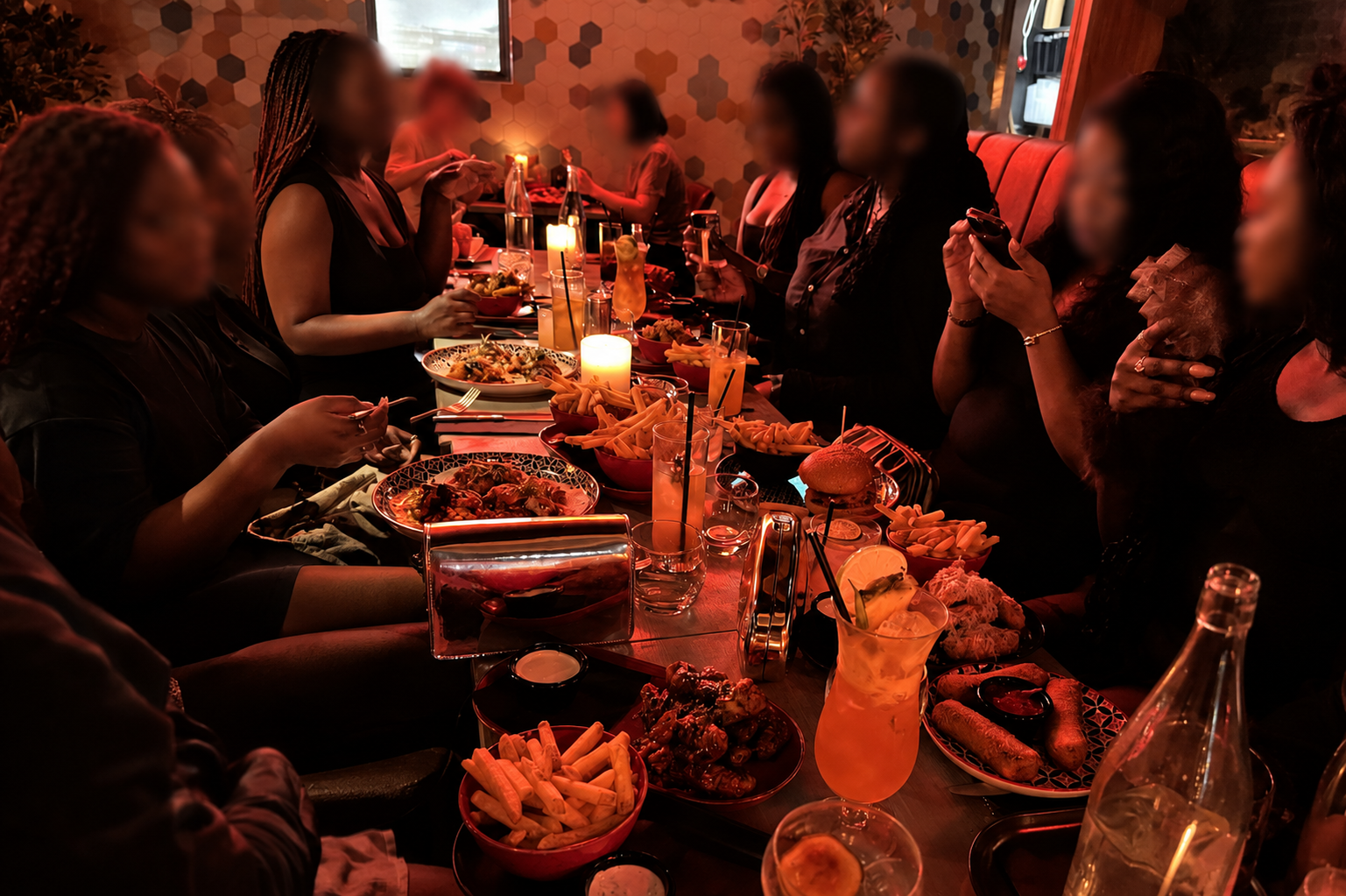
My friend’s birthday dinner was supposed to be about celebrating her.
Instead, it became about getting the perfect picture.
There were six of us squeezed around a table at a small restaurant in Calabar. The food had arrived, but no one reached for it. She kept adjusting everything instead. One plate moved to the left. A glass pulled closer to the centre. We leaned in for a picture, then leaned back because the lighting wasn’t right. Someone joked that the food would get cold before we finished taking pictures.
She laughed but didn’t stop.
Nearly fifteen minutes passed before she finally smiled at the screen, tapped “Post,” and said, “Now we can eat.”
Five minutes later, her phone was back in her hand.
“Only twenty-three likes,” she said quietly.
One of us laughed. “You’ve just posted it.”
“I know,” she replied, refreshing the screen again.
The rest of us drifted into conversation. Someone talked about exams. Another friend was describing a disastrous bus ride across town. We laughed so hard that one of us almost knocked over a drink.
She missed most of it.
Every few minutes her thumb slid down the screen, refreshing the page. When another notification appeared, she smiled. When nothing changed, she locked the phone, only to unlock it again moments later.
At one point I wanted to ask why it mattered so much. The people whose opinions should have mattered were already sitting around the table, celebrating her. Yet somehow, the reactions from people who weren’t there seemed just as important.
A few weeks later, I was scrolling through Instagram when I saw another post from her.
The pictures looked effortless. She was smiling in a beautiful dress, standing outside a café with the caption, Soft life looks good on me.
The comments arrived quickly.
“You’re living the dream.”
“See enjoyment!”
“This is the life.”
I smiled when I saw the post, but I couldn’t stop thinking about a conversation we’d had two days earlier.
She had called me laughing about how quickly money disappeared. After paying for transport and a few other expenses, she said she was counting every naira until the end of the week. We laughed about it because that’s what friends do, but I remembered how tired she sounded.
Looking at the comments, I realized none of those people knew that version of her.
They only knew the photograph.
That was when I started paying closer attention, not just to her posts but to everyone else’s, including my own. I noticed how carefully we chose what people were allowed to see. The ordinary days stayed in our camera rolls. The disappointments rarely made it online. We uploaded celebrations but cropped out the stress that came before them.
Slowly, I began to understand why social media can feel so convincing. The version we see is rarely false, but it is almost never complete.
The birthday dinner wasn’t fake. She really was happy.
The café pictures weren’t fake either. She really did enjoy that afternoon.
What the photographs couldn’t show was everything outside the frame: the waiting, the worrying, the refreshing, the pressure to keep looking like life was always going well.
Months later, I can no longer remember how many likes either post received. I doubt she remembers, too.
What I remember instead is a table full of friends waiting for permission to eat while one person waited for strangers to approve a picture.
That memory has stayed with me far longer than any notification ever could.