
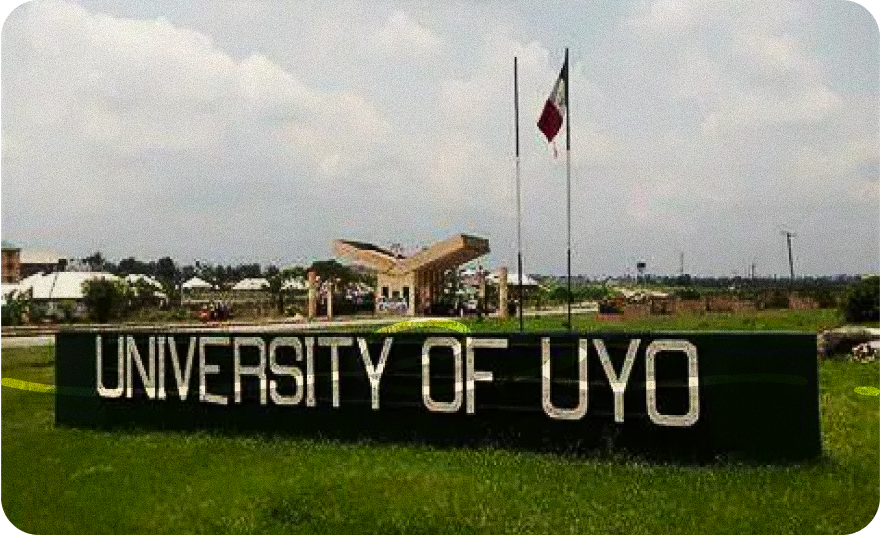
I had just graduated from secondary school and had been admitted into the University of Uyo to study Quantity Surveying.
I was seventeen, and life felt simple enough to calculate.
Five years. That was how long my course would take. By twenty-one, I would be a graduate.
That was the plan.
I didn't know then how quickly a five-year plan could stretch into almost a decade.
We really don't know the trajectory our lives will follow or the sacrifices we'll have to make to reach a goal we never imagined would take so long to accomplish.
At seventeen, I was timid and naive. Any way the wind blew, I tilted in that direction. I hadn't yet found the strength to stand my ground or question decisions made by people I assumed knew better than I did.
Amidst all of this, I lost my mum.
Sometimes I wonder how different my life would have been if she had lived.
Maybe my life wouldn't have danced to the rhythm of this particular wind. Maybe she would have fought for me in places where I didn't know how to fight for myself. Maybe she would have done everything she could to make sure I crossed the finish line.
I'll never know.
What I do know is that I entered university believing that if I did what I was supposed to do, everything would work out.
I was wrong.
People often talk about Nigeria's failed education system from a distance.
I don't have to.
I lived it.
What many people call a broken system became years of my life.
The First Mistake
Federal universities are no strangers to strikes, and my admission happened to coincide with one of the longest and most disruptive ones.
This time, it was the non-academic staff who had gone on an indefinite strike. They were responsible for screening newly admitted students into their respective departments.
But the academic calendar couldn't wait forever.
So the academic staff stepped in.
They did what they could, but they were handling a process that wasn't ordinarily theirs.
When I went for my screening, I was told that my subject combination didn't qualify me for the Department of Quantity Surveying.
To keep my admission, I had to choose another department.
I looked around for something close to what I had originally wanted. I still wanted something related to surveying, so I chose Geo-informatics and Surveying, commonly known as Land Survey.
And just like that, I moved on.
I attended lectures, wrote tests, submitted assignments, and even began processing my tuition.
Then the non-academic staff returned from their strike and started reviewing the screening list.
That was when I was told something that should have been good news.
I had actually qualified to study Quantity Surveying all along.
At the time, I was relieved.
The course I had wanted from the beginning was suddenly available to me again.
I didn't know I was walking into another problem.
Remember, I had already written tests and submitted assignments in Land Survey. By the time I was asked to return to Quantity Surveying, we were already preparing for our examinations.
I was seventeen.
I didn't know enough to question what was happening.
So I moved.
When My Results Disappeared
I wrote my examinations in Quantity Surveying while all my continuous assessment scores remained in Land Survey.
Then the results came out.
It was Year One, and I was sitting in the cafeteria with some of my course mates when we heard that our results were out.
I was a little shy, so instead of checking mine myself, I asked one of my course mates to help me check.
She took my phone.
Then she paused.
It was a long enough pause to make me look at her.
“Did you write the exams?”
I looked at her in surprise.
“Ah, how now? Didn't we sit together?”
She looked at the screen again.
“There is no result here o.”
My heart started pounding.
I took the phone from her and checked for myself.
She was right.
There was no result.
For a few seconds, I didn't really understand what I was looking at.
Around me, people started suggesting what I should do.
“Go and meet your exams officer.”
“Maybe it's a mistake.”
“Go and ask them what happened.”
Everyone seemed to have an explanation or a solution.
I listened.
But at the time, I didn't fully understand the weight of what had just happened.
I didn't know that a missing result could follow me for years.
I didn't know that this was going to change the course of my university education.
I only knew that I had written my exams, yet somehow, my result wasn't there.
I wrote letters explaining what had happened and suggesting how it could be resolved.
Nothing changed.
Instead, those letters marked the beginning of one of the most exhausting periods of my life.
I was told to keep attending classes and focus on the new academic session. They assured me the issue would be sorted out.
So I held on to hope.
I kept going.
Unbeknownst to me, I was doing the latter without the results I needed to prove that I had actually been going.
Then came the day that made everything even more real.
I logged into my student portal and discovered that I still carried an F of zero.
A grade I had done nothing to earn was sitting beside my name as though it belonged to me.
By then, I was already approaching 300 level.
I became depressed.
Failure is difficult to explain when you know you didn't fail.
It's even harder when there is nothing you can point to.
How do you prove that you passed when the system has no record that you did anything at all?
Eventually, I decided to suspend my studies for a while.
At the same time, I began the process of transferring to another department because my CGPA had fallen too low to give me many options.
Mentally, I was exhausted, and eventually, the exhaustion began to show physically.
People whispered about how unserious I was.
Even my own father questioned whether I had taken my education seriously.
That part hurt differently.
Because I had.
I simply had no results to prove it.
Starting Again
Life really has a strange sense of humour.
At seventeen, I couldn't have imagined that my university education would become a tour through different departments at the University of Uyo.
After a year away from school, trying to put my sanity back together, I returned in 2020.
While my colleagues were preparing for their fourth year, I was walking into Year One again.
This time, in a department I knew almost nothing about.
I had transferred to the Department of Urban and Regional Planning.
Starting over wasn't the life I had imagined for myself.
But looking back now, it was one of the best decisions I made.
I could have stayed back and spent my days mourning everything that had gone wrong. I could have allowed those experiences to convince me that my life was permanently stuck.
Instead, I chose to move with my life.
I sat with myself.
I mourned everything I had lost.
I picked up the pieces.
And I started again.
Not because starting again was easy, but because staying in the same place wasn't going to change anything.
Almost There
Years passed.
And somehow, I kept going.
As I write this, I am preparing to sit my final semester examinations. If everything goes as planned, I will finally graduate on 1 September 2026.
After everything I'd already been through, you would think the story would end there.
It didn't.
Again
When I went for the mandatory final-year screening, I arranged my documents just like every other student and joined the line.
I wasn't expecting anything unusual.
When it was my turn, I handed over my documents to the screening officer.
He checked them.
Then he looked at me.
“Your name is not here o.”
I thought he was joking.
He wasn't.
I looked at him, waiting for him to smile or tell me he was only teasing.
Instead, he repeated himself.
My name wasn't on the list.
I even volunteered to go through the list myself, thinking perhaps he had simply missed it.
I searched.
Nothing.
He still insisted that my name wasn't there.
And then, almost immediately, the mood around me changed.
People had noticed.
Some looked at me with concern. Others came over to ask what the problem was.
Suddenly, I was receiving sympathy for a problem that shouldn't have existed in the first place.
And as I stood there with my documents in my hands, I could feel my mood changing.
Not because I didn't know what to do.
But because I knew this feeling.
I had been here before.
Seven years earlier, a missing academic record had disrupted my education.
Now, in my final year, my name was missing again.
For a moment, it felt like I had been pulled straight back into 2017.
Only this time, I wasn't seventeen anymore.
And I wasn't going to quietly accept it.
I asked questions.
I confronted the system.
I took the necessary steps to find out why my name had been omitted.
And within twenty-four hours, the problem was resolved.
Twenty-four hours.
After everything I had spent years going through, this particular problem took one day to fix.
That almost made it worse.
Because it reminded me of how much unnecessary suffering can come from mistakes that should never have happened in the first place.
Why do we have to go through so much to become something?
Why do we have to turn everything into spiritual warfare just to escape life's torture?
At one point, I almost believed my village people were right beside me, kicking against my progress in life.
But perhaps the biggest difference between 2017 and now is that I no longer believe I am powerless.
I know how to ask questions.
I know how to push back.
I know that sometimes, you have to refuse to quietly accept the consequences of somebody else's mistake.
What the System Doesn't See
I have made a covenant with myself that no child of mine will attend a federal university.
Maybe that's dramatic.
But after nearly a decade of navigating strikes, mistakes, transfers, missing results and administrative confusion, I have earned the right to be dramatic about it.
People make mistakes.
Institutions make mistakes.
But behind every mistake is a person who has to live with its consequences.
For me, that consequence was almost a decade.
And that is what people miss when they casually describe Nigeria's education system as broken.
A broken system is not just a policy problem.
It is a student sitting in a cafeteria with her course mates, waiting to see her result, only to discover that there is nothing beside her name.
It is a young person staring at an F they did not earn.
It is a father wondering whether his child ever took school seriously.
It is a student starting university all over again while everyone they started with is already years ahead.
It is losing time you can never get back.
It is learning to pick yourself up when you are tired of picking yourself up.
And sometimes, it is standing in a final-year screening line years later, searching for your name again.
Only this time, you know how to fight for yourself.