
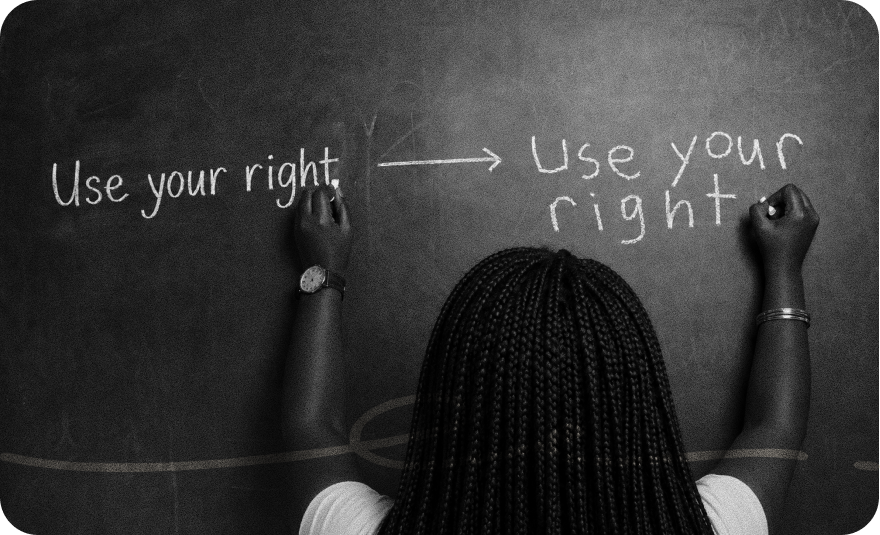
Growing up in Nigeria, one thing I noticed very early in life was how seriously people treated the use of the left hand. It was not just ordinary correction. It almost felt like a social rule everybody already understood. If you tried to give an elder something with your left hand, they would either refuse to collect it, look at you somehow, or quickly tell you to use your right hand instead. Sometimes the reaction alone was enough to make you feel embarrassed. Even as children, many of us learned to switch hands immediately before someone corrected us.
I remember one particular moment that really stayed with me. I tried handing something to an elderly woman with my left hand because my right hand was occupied at the time. Immediately, she screamed at me to change the hand. The way she reacted made me feel so embarrassed, like I had done something terrible, even though I genuinely meant no disrespect. That moment made me realize how deeply rooted this belief is in our society.
What makes it more interesting is that most people never really explain why. It is just something passed down from one generation to another. In many African homes, especially in Nigeria, the left hand is associated with disrespect, bad manners, or even impurity. Some people say it is because the left hand was traditionally used for personal hygiene in times before modern sanitation, so the right hand became the “clean” hand for greeting, eating, and giving things to people. Over time, that practical habit slowly turned into a cultural belief. What may have started as hygiene somehow became morality, and people began to treat the left hand itself as wrong.
The thing is, culture has a way of becoming so normal that people stop questioning it. I have seen situations where someone stretches out their left hand innocently, maybe because their right hand is occupied, and the atmosphere changes immediately. The person is corrected before they are even understood. Sometimes it is done jokingly, but other times it comes with genuine irritation, as though the person intentionally wanted to insult someone.
I think this affects naturally left-handed people more than we realize. Imagine being a child who naturally writes, eats, or does almost everything with the left hand, then constantly being told that the hand you are most comfortable with is somehow unacceptable. I have seen children forced to switch hands while writing because their parents did not want them to become “too left-handed.” Some people eventually adapt, but others grow up feeling constantly watched or corrected over something they did not choose in the first place.
What is even more interesting is that this belief is not equally intense everywhere. Some younger people today are beginning to care less about it compared to older generations. In some homes, nobody really minds anymore, while in others it is still treated very seriously. That difference alone shows that this idea is cultural, not natural. If something were truly wrong, it would not depend on generation, tribe, or environment.
Personally, I do not see the left hand as something bad. To me, it is simply the second hand. We were created with two hands, not one useful hand and one useless hand. The value of a person should not be reduced to which hand they use to collect a book, pass a plate, or wave hello. Respect comes from intention, character, and behavior, not from whether someone used their right or left hand in a moment.
I also think this stereotype says a lot about society itself. It shows how easily people can inherit beliefs without questioning where they came from or whether they still make sense. Many of us grew up following certain rules simply because “that is how it has always been.” But not every old belief should remain untouched forever. Some traditions preserve values, while others quietly make people feel excluded for being naturally different.
At the end of the day, I believe the left hand deserves the same normalcy as the right. Nobody should feel ashamed for using a hand they were born to use. Instead of attaching shame to something so natural, I think society should focus more on how people treat others genuinely. Because a respectful person will still be respectful regardless of the hand they use, and an unkind person will still be unkind even with the “accepted” hand.