
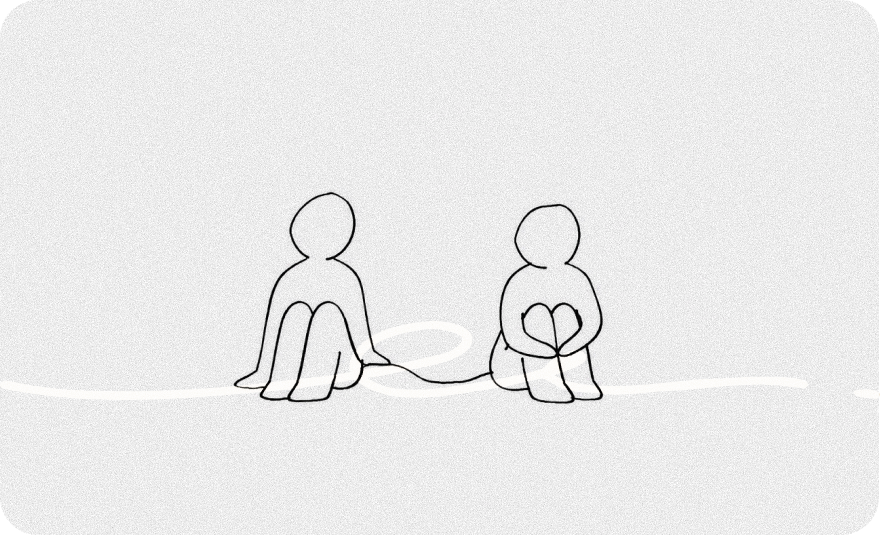
I met her during my service year in Abuja, in 2024, at a point when most of us were still learning each other's names in the little clusters that form naturally among corps members far from home. She was quieter than most, the kind of quiet that takes effort to maintain, and it was a while before I understood why she kept a careful distance from every conversation that tried to include her.
Someone mentioned it to me eventually, the way such things travel — not maliciously, just carelessly, a fact passed along like weather. She was HIV positive, on medication, managing it the way any chronic condition is managed. I remember the small, involuntary pause that followed, a beat where some old, half-formed caution I did not know I still carried tried to surface; something about shared cups, shared plates, the kind of casual physical closeness that comes with new friendships. I noticed it, and I noticed, almost immediately after, how little of it actually held up once I made myself examine it. I knew, in the plain factual sense, how the virus was and was not transmitted. What surprised me was that knowing it and feeling it were not quite the same thing, and that the gap between them had opened, uninvited, for half a second before I closed it myself.
I started showing up anyway, and I made a point, afterward, of not treating that pause as something to be forgiven quietly and moved past. I ate from the same plate as her the next time we got food together, not to prove anything to her, but because I did not want the caution to have the last word in my own head. She accepted these invitations slowly at first, almost testing them, as though waiting for the moment I would find a reason to stop.
One evening, sitting outside together after one of these ordinary hangouts, I told her I wanted to keep visiting, keep having our gist sessions the way regular friends do. She went quiet for a moment, looking at me in a way I had not been looked at before, and then she said, "How do you effortlessly oil this machinery of friendship despite your knowledge of my predicament, and not discriminate or judge me like others do?" I felt something move through me right then, a sharp rush of goosebumps I was not prepared for. It was not only the question itself but everything folded inside it, including every friend who had quietly disappeared once they knew, and every conversation that had gone stiff the moment her status came up. I understood, in that sentence, that the caution I had felt and dismissed in half a second was something she had watched other people feel and act on fully, again and again, until it became the expectation she carried into every new friendship before it even had a chance to prove otherwise.
We kept our gist sessions going for the rest of that service year, and I noticed, over time, that the machinery she had named needed less oiling than she assumed. There were evenings we forgot entirely that stigma was a subject either of us had ever discussed as well as arguing over whose turn it was to buy suya, complaining about our postings, and laughing at nothing in particular. Those ordinary evenings were, I came to realize, the actual proof she had been asking for that first night, more than anything I could have said to her in words. Consistency, repeated often enough and asking for nothing in return, was the only real answer to her question, and it was not one I could give her all at once — only in installments, one unremarkable gist session at a time.
I still think about that phrase sometimes, oiling the machinery of friendship, and I understand it differently now than I did the night she said it. It was not really a question about me. It was the sound of someone recalibrating, in real time, what she had quietly decided was possible for her — one ordinary evening, repeated enough times to start to trust it.