
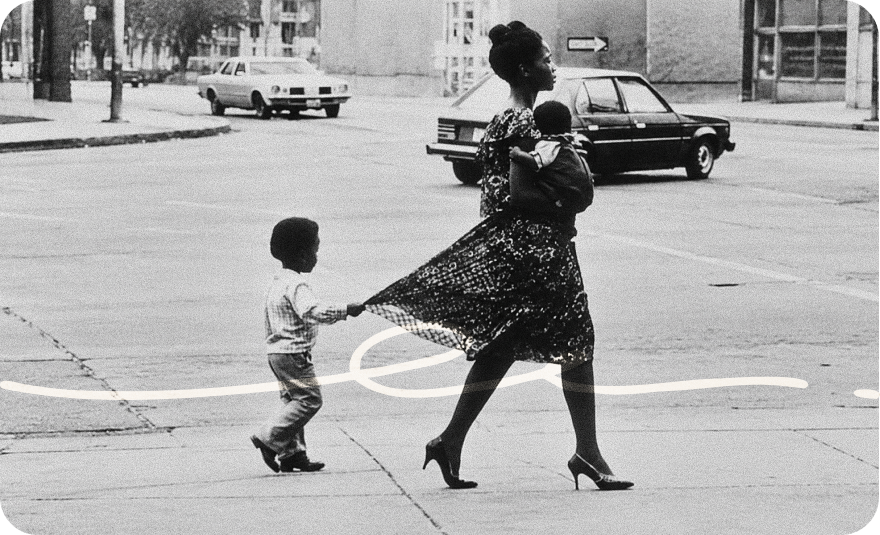
I remember the day the whispering started on our street.
She was eighteen years old and lived just a few doors down from us. Up until then, she was just the quiet girl in the neighborhood who sang in her church choir. But the moment the curve of her stomach began to show through her clothes, the atmosphere on our street shifted.
Word quickly traveled back to our compound: her church had quietly asked her to step down from the choir stand. Shortly after, the small shop where she worked told her not to come back. Even the woman selling across from her compound, a woman whose own husband, as we later found out, had never even paid her bride price, stood by the street corner and loudly condemned her.
Everyone in the neighborhood had an opinion about the “stubborn girl” who had ruined her life.
Yet no one ever spoke the name of the boy who put her in that condition.
When the pregnancy appeared, he simply said it wasn’t his child and vanished. He retained his freedom, his reputation, and his peace. Society let him go, while she was assigned a public sentence she had to serve every single day on our street.
I vividly recall the afternoon she walked into our compound carrying her baby. The infant was burning with fever, and she had no money for a clinic. She had managed to land a low-paying job as a sales girl, carrying her child to work every morning because she had no one to leave her with.
Her landlord had generously given her a tiny room to sleep in, but the other tenants mocked her mercilessly whenever she couldn’t contribute to the compound’s monthly NEPA electricity bill. In the end, it was my mother who stepped in to pay her share of the light bill.
My mother sat her down in our parlor and asked her a simple question
“How are you surviving?”
The girl collapsed into tears.
She confessed that in all those months of being shunned, no one had ever asked how she was actually doing. She spoke about going days without eating just to make sure the little food she had went to her baby.
My mother looked at her, shook her head in silence, walked into her bedroom, and returned with ₦10,000 so she could get something to eat and take care of herself and the baby.
Where others saw a moral failure, my mother saw a terrified, starving teenager trying to keep a human life alive.
For a long time, I thought this kind of cruelty was reserved for young, unmarried girls in the neighborhood. But watching that eighteen-year-old girl struggle with her baby brought back memories of my own childhood. It reminded me of what my aunt had gone through while raising her children.
My cousins and I were close in age, so as we grew up together, I was never completely removed from the reality of what their mother was carrying. Because my aunt was close to my mother, I often overheard their conversations. I heard the worries, the disappointments, and the desperate attempts to keep her children in school.
I was still a child, but some of those moments stayed with me.
My aunt was a civil servant in her thirties with two children when her husband left her to marry another woman. She was not a teenager who had made a reckless decision. She was a married woman whose husband simply walked away from the family they had built together.
I remember hearing her talk about going to the bank to ask for a loan to pay her children’s school fees. Sometimes she would take important documents with her, hoping they would be enough to secure the money she needed. On one occasion, when the bank refused her, she broke down completely. She had brought her documents with her and, through tears, told them to take everything she had if that was what it would take. She did not care anymore. She just needed the money to pay her children’s school fees.
There were times she had to go to her children’s school and plead with the principal to allow them to sit for their examinations because she had not been able to pay their fees.
There were also opportunities she could not take. Sometimes her work required her to travel to other states, but she had no one who could take responsibility for her children in her absence. So she stayed.
She skipped meals so her children could eat. She deprived herself of things she needed so they could have the finest hair, the neatest school uniforms, and the best shoes she could afford. Whatever she had, she stretched until it covered them first.
Their father never paid a single child’s school fees.
He married his new wife, built another family, and provided for them, while turning his back on the children he had left behind. My aunt had occasional help from relatives, and she was grateful for it, but occasional help could never replace the responsibility of a father who had chosen to walk away.
Yet when people saw my aunt, some simply called her a “single mother.”
The label made it sound as though she had chosen the circumstances that brought her there. As though she had gone looking for motherhood without a family, or made some reckless decision that she alone was now paying for.
But she had been married.
She had entered a marriage believing she was building a family with someone who would remain part of it. When he left, she did not leave with him. She stayed with the children and carried what he had abandoned.
She raised two of the most disciplined, refined, and educated young adults I know, children who had far more care and structure than many raised in two-parent homes.
Yet societal judgment is patient. It simply waits in the grass.
When my aunt’s first daughter reached her twenties, a young man came to ask for her hand in marriage. But his family fiercely opposed the union. Their reason was swift: she was the daughter of a single mother, and nothing good could come from such a home.
Looking at my cousin’s heartbroken face, the full weight of our collective hypocrisy hit me.