For a long time, I thought I knew what a traditional woman was. Like many people, I had absorbed the definition that is often presented online and in everyday conversations: a woman who stays home, cooks, cleans, takes care of her husband and children, and allows the man to lead while she follows. It seemed straightforward. In fact, I thought that was what tradition had always looked like.
But the older I get and the more women I observe, the more I question whether what we call "traditional" today is actually tradition at all.
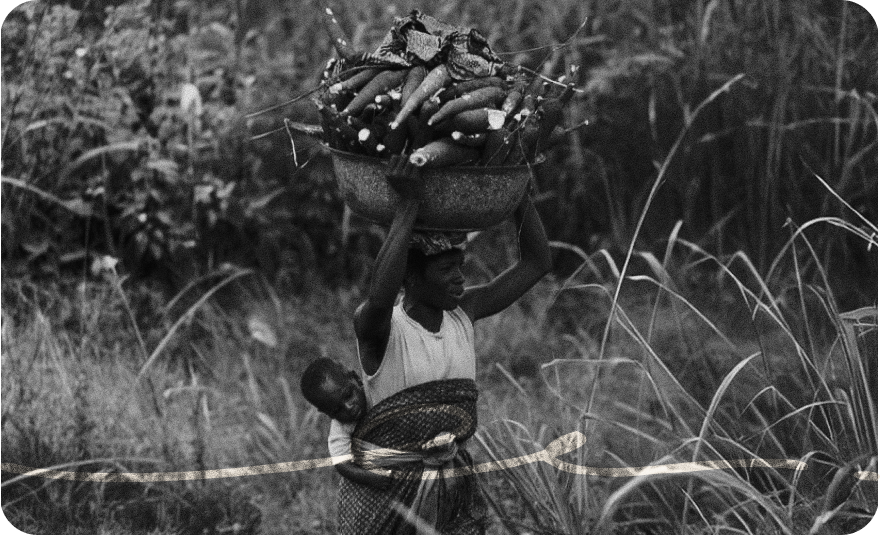
When I began paying closer attention to the women in my family and community, I noticed something interesting. The women who are often described as traditional were not simply sitting at home waiting for their husbands to provide everything. They were working. They were trading in markets, farming, running small businesses, managing households, raising children, supporting relatives, and contributing financially whenever necessary.
My grandmothers' generation, and even the generation before that, did not seem to fit the modern social media image of the traditional woman. They worked incredibly hard both inside and outside the home. Their contribution to the family was not limited to domestic duties. In many cases, entire households survived because women were actively generating income alongside men.
This realization forced me to reflect on how the term "traditional woman" is being used today.
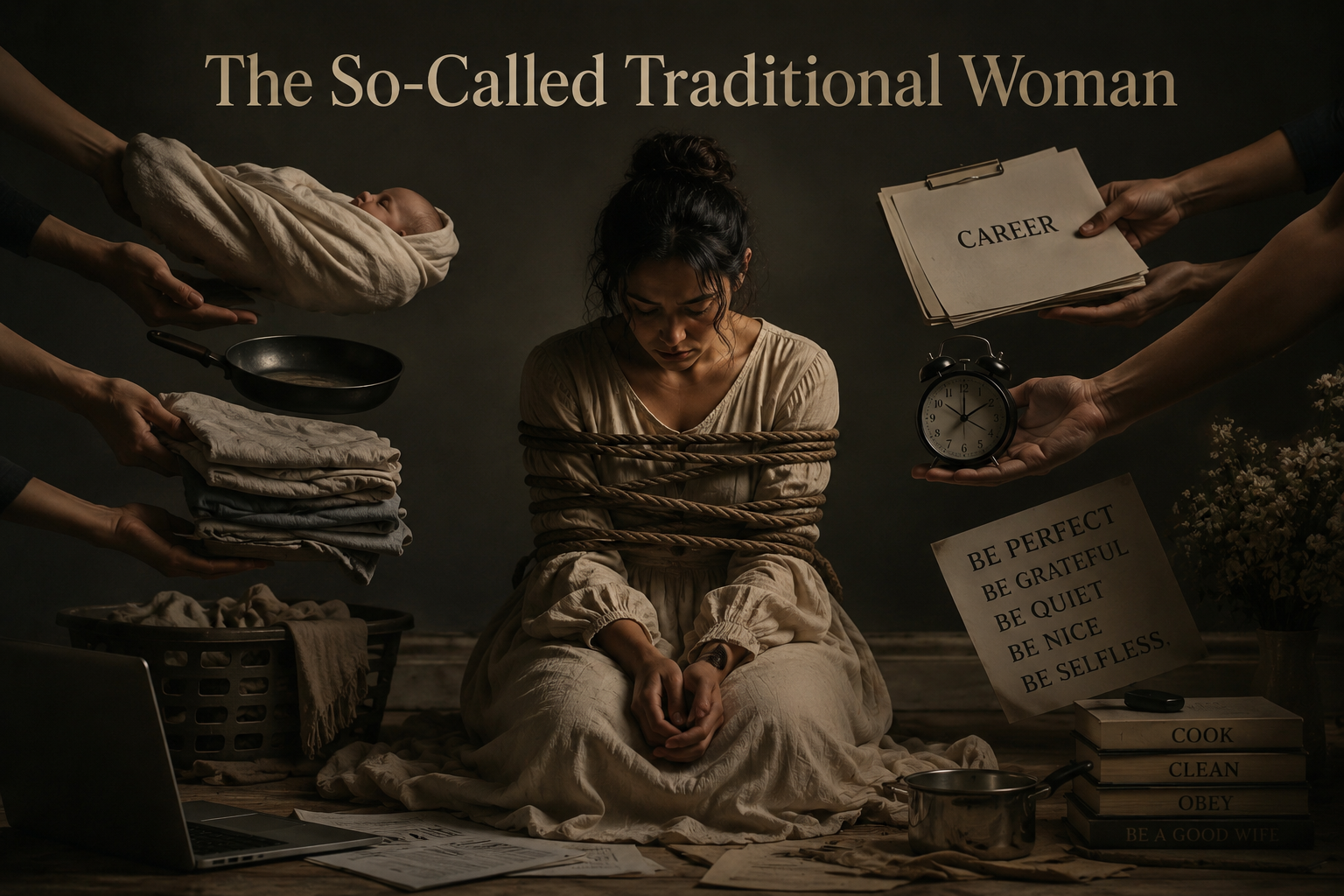
Somewhere along the line, it seems that tradition became romanticized. We began to pick and choose certain aspects while ignoring others. Many conversations about traditional women focus heavily on submission, homemaking, and feminine roles, but rarely acknowledge the economic realities that women have always faced.
Historically, women worked because families needed every available hand. Survival was often a collective effort. Men and women had different responsibilities, but both contributed. The idea that a traditional woman simply stayed at home while her husband handled every financial obligation appears, in many cases, to be more fantasy than historical reality.
This does not mean there is anything wrong with a woman choosing to stay home and care for her family. Homemaking is valuable work and should never be dismissed. Nor is there anything wrong with a woman wanting a provider. Every woman has the right to decide the kind of life that suits her values and circumstances.
What I struggle with is the way labels are used to judge women.
Today, a woman who pursues a career may be told she is not feminine enough. Another woman who chooses to stay home may be told she lacks ambition. A woman who wants both a family and a career is often expected to perform miracles. It seems that no matter what choice a woman makes, someone is ready to tell her she is doing womanhood incorrectly.
The more I reflect on it, the more I believe that womanhood has never been as one-dimensional as people make it seem. Women have always adapted to the needs of their families, communities, and circumstances. Some stayed home. Some worked. Most did a combination of both.
Perhaps the problem is not tradition itself, but our tendency to reduce complex human experiences into neat categories.
The so-called traditional woman is often presented as a single image, but real women are far more complicated than that. They have always been. They carry responsibilities that are emotional, physical, financial, and social. They make sacrifices that are often unseen. They navigate expectations that change from one generation to the next.
As I continue to learn and observe, I find myself less interested in defining what a traditional woman is and more interested in understanding the realities of women's lives. The stories of the women who came before us suggest that tradition was never about fitting into a rigid box. It was about resilience, contribution, family, and doing what was necessary in the season of life they found themselves in.
Maybe the conversation should not be about whether a woman is traditional enough. Maybe it should be about whether she has the freedom, support, and respect to choose the life that is right for her.
And perhaps that is the lesson I have learned through reflection: real women have always been more than the labels we give them.