Sunlight seeped in through the open part of my window and so did a woman's voice.
I listened closely.
"Adam! Will you leave that place now before you fall into the gutter?"
A door flew open.
"Madam, please do not raise your voice at my son next time."
"So it's a bad thing for me to tell your son to leave a dangerous place?"
"What is your own business? Go and correct your children and leave mine alone."
The woman muttered something under her breath and dragged her plastic chair back to the front of her apartment. Adam had already wandered off, distracted by something else.
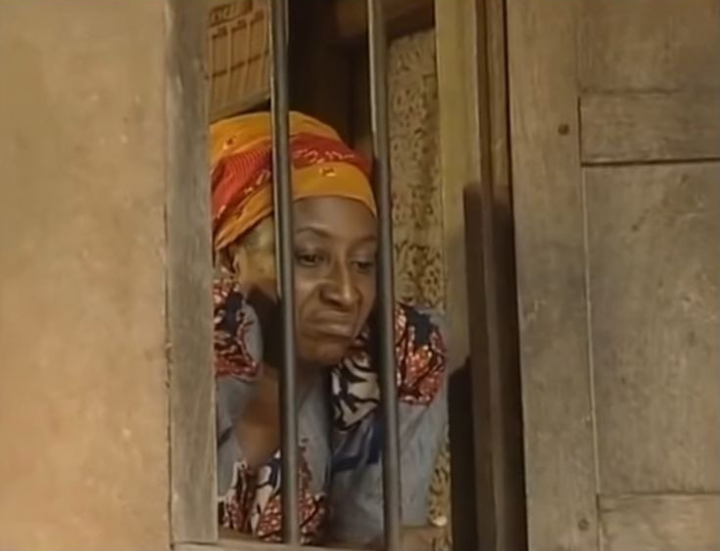
I remained at the window.
Not because I was waiting for the argument to continue, but because I couldn't stop thinking about how differently that conversation would have ended on Editung Street.
There was Editung Street, Editung Avenue, Editung Lane and Editung Close. We lived on Editung Street.
Only two compounds had fences and gates. The rest stood open. You could walk into the next compound without announcing yourself. The children certainly did.
You could tell morning had arrived without looking outside.
First came the woman hawking akara and akamu.
"Akara! Akamu!"
Then the scrape of brooms against cement.
Women swept the front of their compounds while discussing everything that had happened before the sun came up.
"See her. She has not swept again today."
"She'll soon come outside when all of us have finished."
Somebody laughed.
Somebody defended her.
By tomorrow morning there would be something else to talk about.
From another compound came the cries of younger children refusing to get ready for school.
"I don't want to go!"
"You'll go!"
"No!"
The crying grew louder.
Nobody seemed alarmed.
That was simply how mornings sounded.
Smoke drifted from the backyard.
Every family had its own kitchen with a kerosene stove and, if NEPA remembered us, an electric cooker. But behind the compound stood a tripod over firewood. One neighbour built it.
Everybody used it.
Women arrived with different pots and different soups, stirring over the same fire while carrying on three different conversations.
Nobody asked permission.
The tripod had an owner but the fire belonged to everyone.
The same was true for the clothesline. One neighbour paid to have it fixed, but by dawn it belonged to the whole compound. My mother woke as early as four in the morning to claim a spot before the other women came out with their buckets of freshly washed clothes. If you overslept, your wrapper might spend another day draped over chairs and windows because every inch of the line had already been claimed.
My mother handed me a small container.
"Go to Mma Grace's house and borrow small salt."
"Mma Grace!" I would shout without knocking
"If it's salt, enter the kitchen," she'd shout from inside.
I entered.
Lifted the pot cover.
"Hmmm."
"You this girl, close my pot."
"I just want to see what you're cooking."
"You'll finish my soup with your eyes."
I collected the salt and ran home laughing.
The next day Mma Grace's child might come for tomatoes, an onion or even peppers.
Nobody counted who borrowed more.
Somehow, every kitchen found its way into another.
Children did too.
One afternoon my sister and I were fighting.
I can't remember what we were fighting about.
I remember the sound of slippers.
A neighbour appeared carrying a cane.
She flogged both of us without asking who started it.
I cried, convinced my mother would rescue us.
When she came home, the neighbour explained everything.
My mother listened quietly.
"I hope you flogged these children very well," she said. "God bless you, my sister."
Then she disappeared into the kitchen and returned carrying a plate of rice.
"Take, ma."
My sister and I looked at each other.
That day we learnt there would be no appeal.
As children, we called them busybodies.
Mostly because lying was almost impossible.
Once, I lied about where I was going.
I climbed onto an okada feeling very clever.
Halfway through the journey, a neighbour saw me.
By evening my mother already knew.
On Editung Street, there was no such thing as getting away with it. Somebody had already seen.
Rain changed the neighbourhood.
The roads disappeared beneath brown water and we abandoned our slippers without thinking twice.
We splashed.
We chased one another.
Somebody floated a tin in the water.
Another child slipped.
Everybody laughed.
"Don't go near the gutter!" mothers shouted from different verandas.
"We won't!"
We lied.
Then went dangerously close anyway.
Sometimes the rain ended with another miracle.
The lights came back.
Children poured out of their compounds and we celebrated together.
Up NEPA!
Up NEPA!
Up NEPA!
The shout travelled from Editung Street to Editung Avenue, then to Editung Lane and Editung Close until every child had joined in.
Nobody organized it.
Nobody needed to.
When my mother travelled to another state, she packed her bag and said, "If you're hungry, go to Eka John's house."
That was all.
She knew we would eat.
If we became afraid at night, someone spread a wrapper on the floor.
"Sleep here."
Sometimes, the neighbour's baby spent more time in our arms than our own siblings did.
The baby would begin the morning tied securely to one woman's back while she swept the compound. Before long, another woman had collected the child because she wanted to cook. By afternoon, one of us carried the baby proudly around the compound until our arms became tired and somebody else took over.
The baby kept changing hands.
Nobody asked, "Whose turn is it?"
There was no timetable.
By evening the baby's mother returned from work, collected her child and went home.
The whole compound had babysat without discussing it.
Of course, living that close meant there were things you couldn't hide.
Arguments attracted listeners before they attracted solutions.
One woman was famous for turning half-truths into full stories before lunchtime.
If someone started building a house, neighbours who hadn't contributed one bag of cement still had opinions.
"That window is too small."
"Tell your mason to shift this wall."
Nobody waited to be invited into your business.
Sometimes they arrived before the problem did.
We didn't need to wait for the biblical Judgement Day.
Judgement happened on Editung Street every other weekend.
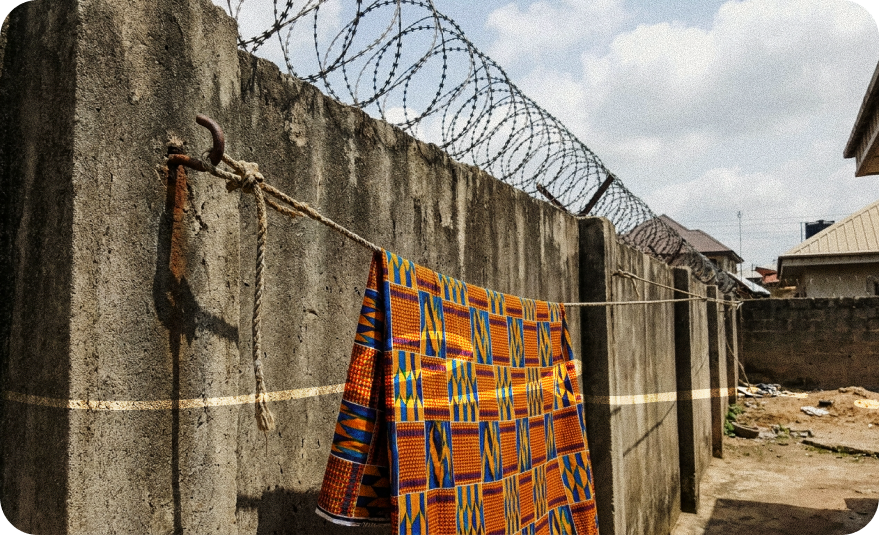
I don't know what came first—the high fences or the gates.
I only know that, somewhere along the way, children stopped pouring into the streets shouting, Up NEPA! Now, when electricity returns, the loudest sound is a prepaid meter reminding someone to recharge.
Babies go to daycare.
People knock before entering.
Borrowing salt feels strangely formal.
And mothers are more likely to tell a neighbour, "Go and correct your own children."
I looked out of my window.
Adam had wandered back to the edge of the gutter.
This time, the woman said nothing.